

Deep Cleaning vs. Standard Turnover Cleaning: What Airbnb Hosts Need to Know
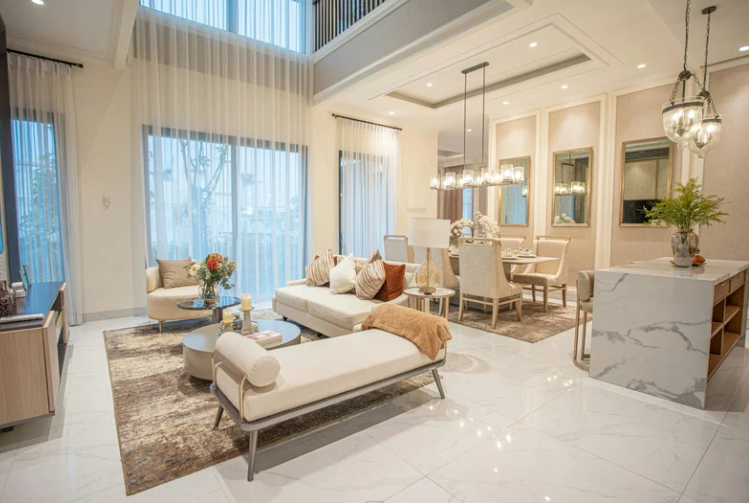
Fresh, spotless, and guest-ready spaces lead to better reviews, happier stays, and guests who can truly relax the moment they walk in.
If you host on Airbnb, “clean” isn’t just a vibe—it’s a measurable part of your guest experience. Guests leave a specific star rating for Cleanliness, and Airbnb explicitly frames cleanliness around meeting its standards (free of health hazards like mold/pests, and free of extensive dust, pet dander, dirty dishes, etc.).
That matters because guests can also escalate cleanliness issues. Airbnb tells guests to report if a place isn’t clean at check-in (and to contact the host first), and notes a 72-hour window to report issues to Airbnb from the time of discovery. Those are the kinds of situations that turn into refunds, rebooking requests, and reputation damage—fast.
From an operations standpoint, the biggest cleaning mistake we see hosts make is treating every turnover as the same job. In reality, you need two different cleaning “lanes”:
Standard turnover cleaning: the repeatable, guest-ready reset you do after every checkout.
Deep cleaning: the periodic “reset/restore” that prevents buildup, odors, and wear from becoming a guest complaint (or a maintenance issue).
At HappyClean BnB, we’re built specifically for that reality: fast Austin turnovers, consistent checklists, and operational support so hosts aren’t playing whack-a-mole with cleaning problems.
What turnover cleaning is (and isn’t)
Every turnover makes your space sparkle.
A turnover clean is the between-guests reset— laundry, surfaces, floors, bathrooms, kitchen, trash, staging, restocking, and a final walkthrough so the home is guest-ready.
It is not intended to fix months of buildup in hidden areas.
Airbnb itself draws a line between “standard cleaning between reservations” and “excessive or deep cleaning.” In its guest ground rules, Airbnb says guests should not leave a listing in a state that requires excessive or deep cleaning (examples include moldy dishes, soiled carpets, pet stains, etc.). It also states that cleaning fees set by hosts are meant to cover the cost of standard cleaning between reservations (examples include laundry and vacuuming).
What deep cleaning is (and why it matters for short-term rentals)
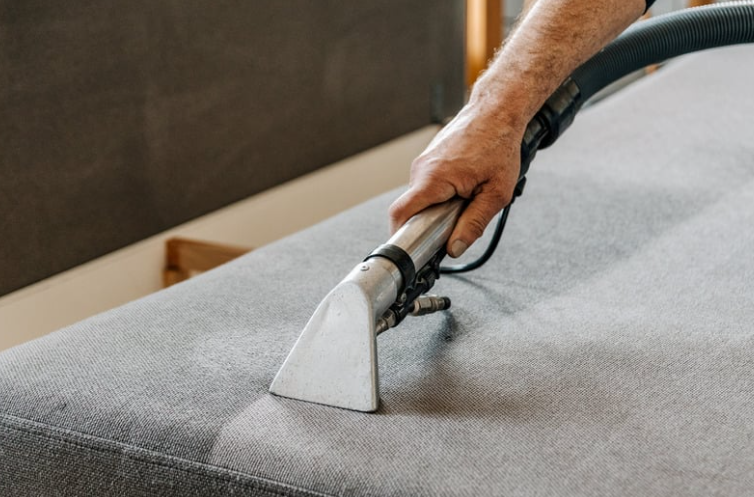
Every surface scrubbed, every corner refreshed—because a truly clean home doesn’t just look good, it feels good.
Deep cleaning is a more thorough, top-to-bottom cleaning that goes beyond what’s handled in a routine clean, focusing on grime and overlooked areas. Consumer home-care references describe deep cleaning as more intensive than a regular session, involving cleaning room surfaces “from top to bottom” and addressing buildup rather than just appearances.
Short-term rentals need that level of reset more often than typical owner-occupied homes because:
Many unique guests cycle through the same space (more varied mess patterns).
Turnover windows push speed (easy for small “misses” to accumulate).
Guest expectations trend toward “hotel-level” presentation.
So when hosts ask “deep cleaning vs turnover cleaning,” the cleanest answer is: Turnover cleaning is about readiness. Deep cleaning is about restoration. You’ll also see this phrased online as standard Airbnb cleaning vs deep clean—and that’s a helpful way to think about it operationally: standard keeps you “guest-ready,” deep keeps you “guest-worthy” month after month.
What is turnover cleaning for Airbnb listings
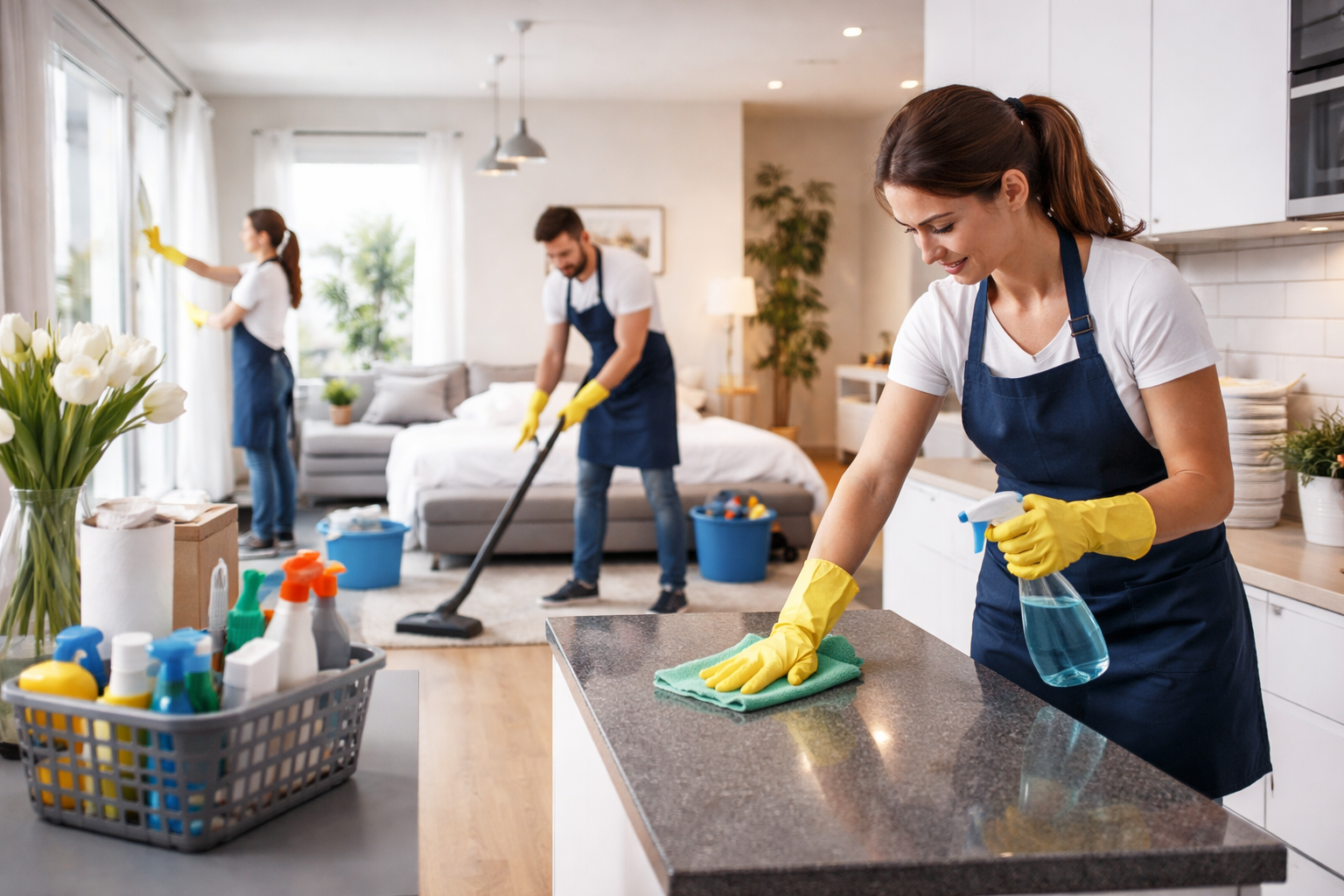
A proper turnover sets the standard.
A practical definition comes from STR operations platforms: a short-term rental cleaning checklist is a list of tasks to complete between guest stays, and it explicitly includes turnover tasks like laundering linens and towels, washing dishes, and disinfecting high-touch areas. Airbnb also sets baseline expectations for hosts: hosts should clean between every stay (do laundry, take out trash, vacuum/sweep, wipe down surfaces, etc.), and the listing should be clean and free of health hazards.
1. What Airbnb expects you to do between stays - Airbnb’s enhanced cleaning resources emphasize a structured approach that includes preparation and ventilation, cleaning, sanitizing, checking, and resetting. Separately, public health guidance reinforces the “clean first” principle: the Centers for Disease Control and Prevention notes that surfaces should be cleaned before sanitizing/disinfecting because dirt can make it harder for chemicals to kill germs.
2. What HappyCleanBnB includes in a standard turnover clean - HappyCleanBnB’s model is purpose-built for STR turnovers. We provide professional turnover cleanings, same-day turnovers, fresh linens, restocking, and detailed quality checks, and we’re designed to integrate with automated hosting systems.
Operationally, we focus on what keeps standards consistent over hundreds of stays:
Property-specific checklists and hospitality-grade finishing touches.
Pre- and post-stay documentation (before/after photos, checklists, incident reports, restock records).
Automated scheduling using calendar sync, so cleanings trigger automatically after checkout.
Optional “ops support” add-ons: trash bin rollout, supply management, pre-arrival inspections, minor repairs, and more.
If you’re a host who has ever typed Airbnb cleaning service near me the night before a check-in, you already know why these systems matter—because emergency cleanings are usually too late to save the review. (More on choosing the right partner later.)
What is deep cleaning Airbnb
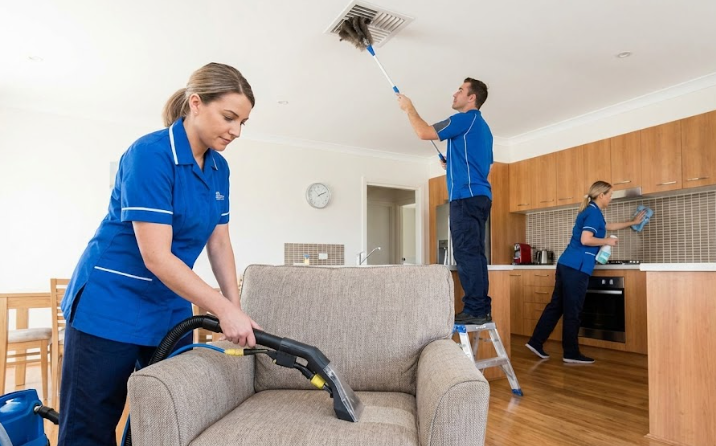
A top-to-bottom, intensive clean that handles what routine turnovers leave behind.
In Airbnb terms, deep cleaning is the “restore the property to like-new” layer that tackles buildup your turnover process does not fully eliminate—especially in hard-to-reach or frequently overlooked areas. The concept aligns with general deep-cleaning definitions (top-to-bottom, more intensive than routine cleaning).
1. When Airbnb hosts typically need deep cleaning - Based on industry cleaning guidance for vacation rentals, deep cleaning is often scheduled periodically rather than every turnover. For example, STR guidance notes that turnovers keep things presentable, while deep cleaning keeps them that way long-term—and offers a sample schedule including quarterly or biannual tasks like carpet shampooing, detailing light fixtures/ceiling fans, washing windows, cleaning baseboards/doors, and deep-cleaning oven interiors.
From our experience cleaning STRs, deep cleaning becomes urgent when any of these are true:
Your listing has back-to-back bookings with minimal buffer (small misses stack up).
You allow pets (hair and odor management takes periodic resets).
You host longer stays (kitchen grease, shower buildup, laundry volume).
You’ve had a party booking or “high-use” stay (spill/stain/odor risk).
2. Airbnb deep cleaning tips that protect reviews - Here are Airbnb deep cleaning tips that are both practical and backed by widely used cleaning guidance:
Clean first, then disinfect/sanitize. CDC guidance emphasizes that dirt can reduce the effectiveness of disinfectants, so you clean before sanitizing/disinfecting.
Follow disinfectant label directions and contact time. CDC facility guidance explains disinfectants need to remain on surfaces long enough to kill germs (wet/contact time) and that the surface should stay wet for the full contact time.
Use EPA-registered disinfectants when appropriate. The U.S. Environmental Protection Agency provides information on EPA-registered disinfectants and emphasizes following product directions and label requirements.
Launder linens using the warmest appropriate water setting and dry completely. CDC home guidance explicitly recommends laundering based on manufacturer instructions, using the warmest appropriate water setting, and drying items completely.
Use the right tools for the details guests actually notice. Airbnb’s hosting resources highlight how professional cleaners use tools like vacuums with attachments for crevices/tracks and glass scrapers for cooktops/shower doors—exactly the kinds of “deep clean” friction points that trigger guest comments.
3. How HappyClean BnB approaches deep cleaning - HappyCleanBnB’s standard turnover process is already designed to be guest-ready and detail-driven, with checklists, staging, restocking, and quality checks.
But when your property needs a deeper reset (seasonal refresh, post-party recovery, long-stay restoration), we go further—addressing baseboards, vents, behind/under areas, inside appliances, odor hotspots, and other “buildup zones” that aren’t always practical in a tight turnover window. This is consistent with how we advise hosts after high-impact stays (long reservations or party bookings), where a deep clean is often warranted beyond a routine turnover.
If you’re looking specifically for an Airbnb deep cleaning service, our goal is to be your on-call “reset team,” not just your between-guest cleaners.
Turnover cleaning checklist Airbnb hosts can use
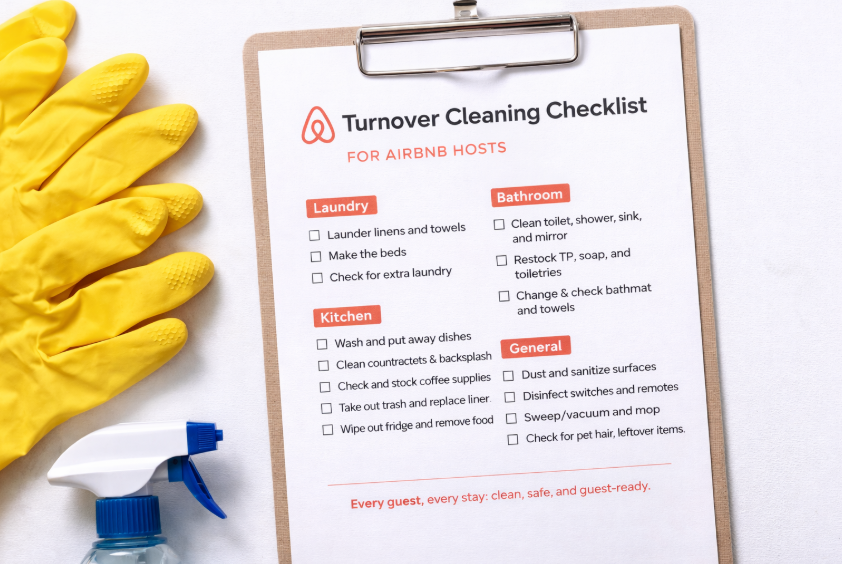
Reduce missed tasks, streamline turnover, and keep your Airbnb guest-ready with ease.
A turnover checklist exists for a reason: STR operations sources emphasize that checklists reduce missed tasks, improve consistency, and make fast turnaround cleaning more manageable. Below is a streamlined checklist you can adapt to your property.
1. Arrival setup and safety
Ventilate the space briefly when possible before starting.
Put on appropriate PPE and prepare supplies/tools.
Confirm check-out is complete and identify any damage/missing items before resetting the home. (Documentation is a best practice for STR operations.)
2. Whole-home reset
Collect trash and remaining guest items; empty all bins and replace liners.
Clean surfaces first, then sanitize high-touch points (handles, switches, remotes, appliance handles, faucets, thermostats).
Floors: vacuum carpets/rugs, sweep and mop hard floors.
3. Kitchen
Remove leftover food; wipe shelves as needed. (This is repeatedly emphasized in turnover guidance as a guest expectation.)
Clean counters/sink; sanitize high-touch surfaces after cleaning.
Clean stovetop; check microwave interior; wipe appliance exteriors.
Run/empty dishwasher as needed; ensure cookware/dishes are clean.
Restock essentials per your standards (paper towels, dish soap, coffee, etc.). (Restocking is commonly part of STR turnover operations.)
4. Bathrooms
Clean and disinfect toilet, sink, shower/tub; polish mirror/fixtures.
Check drains for hair; wipe touchpoints after cleaning.
Replace towels/bathmats; restock toilet paper and toiletries.
5. Bedrooms
Strip and launder linens; make beds with fresh linens.
Dust nightstands/headboard areas; check under bed for debris/left items.
Ensure hair/lint is removed from bedding (guest sensitivity is high here).
6. Living areas + entry
Dust visible surfaces; sanitize remotes and high-touch points after cleaning.
Vacuum upholstery and spot-clean visible marks.
Quick “guest-eye” staging (pillows aligned, clutter removed). (Presentation consistency is emphasized in STR cleaning operations.)
7. Final walkthrough
Confirm the home is reset and restocked; don’t skip high-touch sanitizing.
Lock up; verify lights/thermostat settings; capture photo documentation for QA (a common STR quality-control best practice).
HappyCleanBnB operationalizes this checklist with property-specific standards, automated scheduling, and pre/post photos—so you get repeatable quality without hand-holding every clean.
Deep cleaning checklist Airbnb hosts should schedule regularly
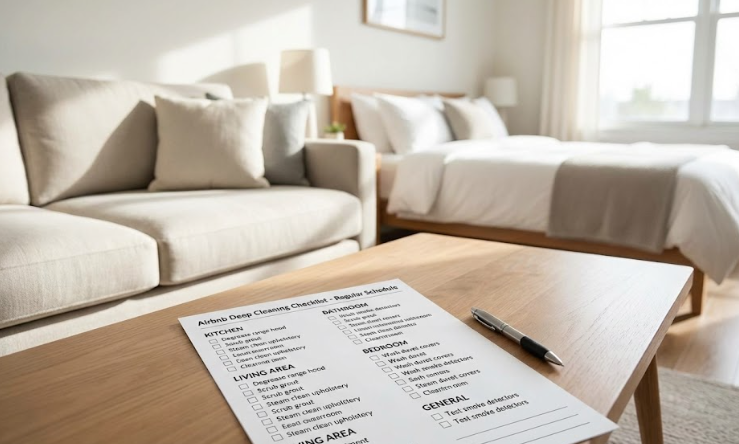
Regular deep cleaning keeps your space spotless, safe, and welcoming—beyond what turnovers can cover.
Because deep cleaning is meant to address buildup, you’ll often schedule it on a cadence (monthly/quarterly/biannual depending on traffic). STR guidance examples suggest quarterly tasks like detailing fixtures/fans and shampooing carpets, and biannual tasks like windows, baseboards/doors, freezers, and drains/gutters.
1. High dusting + neglected ledges
Ceiling fans, light fixtures, vents/returns, top edges and corners. (Deep cleaning is framed as top-to-bottom and detail-intensive.)
Window sills and tracks; sliding-door tracks (a common “guest notices it” detail).
2. Walls, trim, and doors
Baseboards and door frames; spot-clean scuffs and handprints.
High-touch doors/handles cleaned first, then disinfected (follow label contact time).
3. Kitchen “restore” tasks
Degrease cabinet fronts/backsplashes. (Heavy-use kitchens need periodic restorative cleaning.)
Inside oven; clean hood filters if applicable.
Pull out fridge if possible; clean behind/under; wipe interior shelves fully; discard expired items. (This aligns with deep cleaning definitions and STR deep-clean schedules.)
4. Bathroom “buildup reset”
Detail grout/soap scum zones; descale fixtures where needed.
Ventilation fan cover cleaning (dust buildup often contributes to odor and poor airflow).
5. Floors and soft surfaces
Carpet shampooing/steam where needed (especially pet-friendly listings).
Upholstery deep vacuum and spot treatment; address stains and odor sources.
6. Disinfection discipline
Use EPA-registered disinfectants where appropriate and follow the product label (including contact time / keeping surfaces wet).
7. Linens and laundry
Launder using the warmest appropriate water setting and dry items completely (per manufacturer instructions).
Consider rotating or replacing tired linens (appearance and “freshness” are strongly tied to cleanliness perception).
In practice, most hosts blend these: turnover cleaning after every stay, plus deep cleaning at defined intervals and after “impact events” (party bookings, long stays, pet-heavy stays).
What makes Austin turnovers uniquely unforgiving

Structured workflows and checklists ensure every stay in Austin is guest-ready—even on the busiest weekends.
Austin is a high-velocity STR market—events, weekend travel, and back-to-back bookings are common. Operationally, that typically means tighter turnover windows and less “buffer time” for a host who DIY-cleans. That’s one reason STR operations resources emphasize checklists and standardized workflows for fast turnarounds.
So when someone searches Airbnb cleaning service near me in Austin, they usually need two outcomes at once:
A reliable turnover team that can keep up with schedule volatility
A deep cleaning plan that prevents gradual decline (“it’s not dirty, it just doesn’t feel fresh anymore”)
Why HappyClean BnB is built for Austin hosts

Austin hosts, meet your ultimate cleaning partner.
HappyCleanBnB is a local Austin team focused on short-term rentals and vacation rentals, offering same-day turnovers, linens, restocking, and detailed quality checks—plus structured documentation and automation-friendly workflows.
For hosts, that means you can treat cleaning as an operations system—not a recurring emergency:
Automated scheduling (syncs with booking calendars; cleanings trigger after checkout).
Before/after photo documentation and checklists for transparency and quality control.
Linens + supplies restocking to reduce the “inventory panic” that causes last-minute runs.
A-la-carte host support services beyond cleaning: trash bin roll-out, supplies management, pre-arrival inspections, minor repairs, and more.
So if you’re comparing Airbnb deep cleaning vs turnover cleaning and trying to decide what to outsource: our answer is “both,” but with the right structure—turnovers on autopilot, deep cleans on a planned cadence (plus as-needed resets).
Closing note for Austin hosts
Either way, a sparkling home speaks for itself.
If you’re deciding between a standard turnover and a deep clean right now, here’s the simplest rule:
Book Airbnb turnover cleaning for every checkout (non-negotiable).
Add Austin short-term rental deep cleaning on a schedule—and immediately after high-impact stays—so your “baseline clean” never slips.
And if your current reality is Googling deep cleaning service Austin or Airbnb cleaning Austin TX because your calendar is too tight to keep up, that’s exactly what we’re here for: an Austin Airbnb cleaning service designed for STRs, with the operational support to keep hosting hands-off when you want it to be.
