

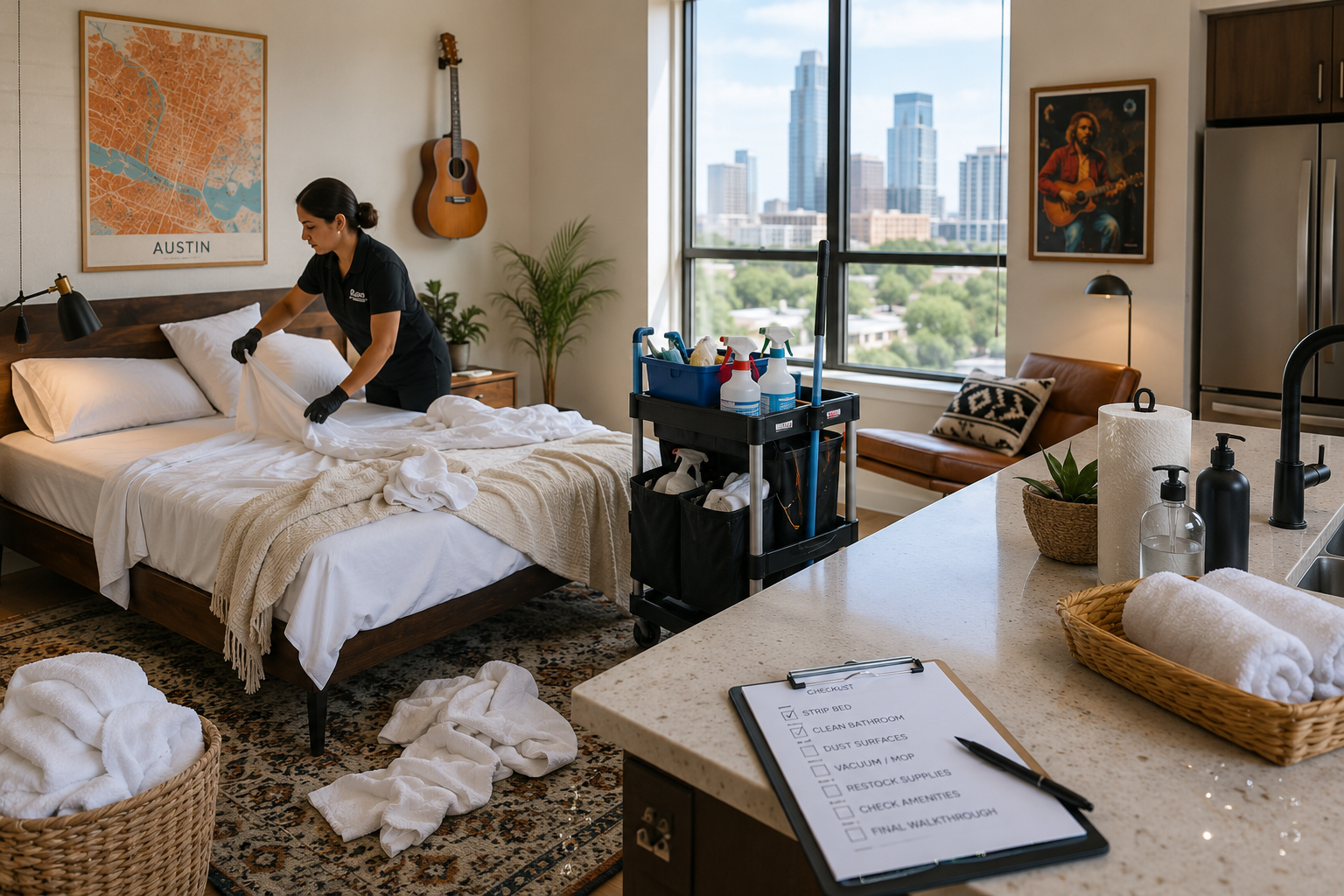
“Behind the scenes of every great Austin Airbnb is a detailed cleaning process designed to reset the space for the next guest.”
A guest can ding your cleanliness rating three days after they've already checked out and driven away. That's the rule most hosts forget — and in Austin, the deck is stacked against you before that guest ever walks in the door.
The Airbnb cleaning challenges Austin hosts deal with aren't really about scrubbing harder. They're about three forces hitting your turnover at the same time: guests who rate cleanliness as its own line item, a city calendar stuffed with demand spikes that compress your cleaning window to nothing, and a humid, pollen-heavy climate that hauls more dirt indoors than a milder market ever sees. Miss on any one of them and the next guest becomes your inspector.
This post breaks down the specific problems Austin short-term rental hosts run into, the operating system that prevents them, and how to know when it's time to hand turnovers to a specialist.
Key takeaways
In Austin, a guest can report a cleanliness issue up to 72 hours after checkout — so the turnover you can't see is the one that costs you the rating.
The hard part isn't dirt. It's the clock: back-to-back bookings during SXSW, ACL, F1, and UT graduation compress laundry, staging, restocking, and inspection into a window that breaks most general cleaners.
Austin's climate (humidity, pollen, sudden rain) drags more grime indoors than a dry-market rental ever deals with.
As of July 1, 2026, platforms must delist unlicensed Austin STRs on city request — and your local contact must respond to emergencies within two hours. Your cleaning partner is now part of your compliance and response system, not just presentation.
The fix is a repeatable operating system: property-specific checklist, backup labor, spare linens, par-level restocking, a final photo check.
Why Austin is a tougher cleaning market than most
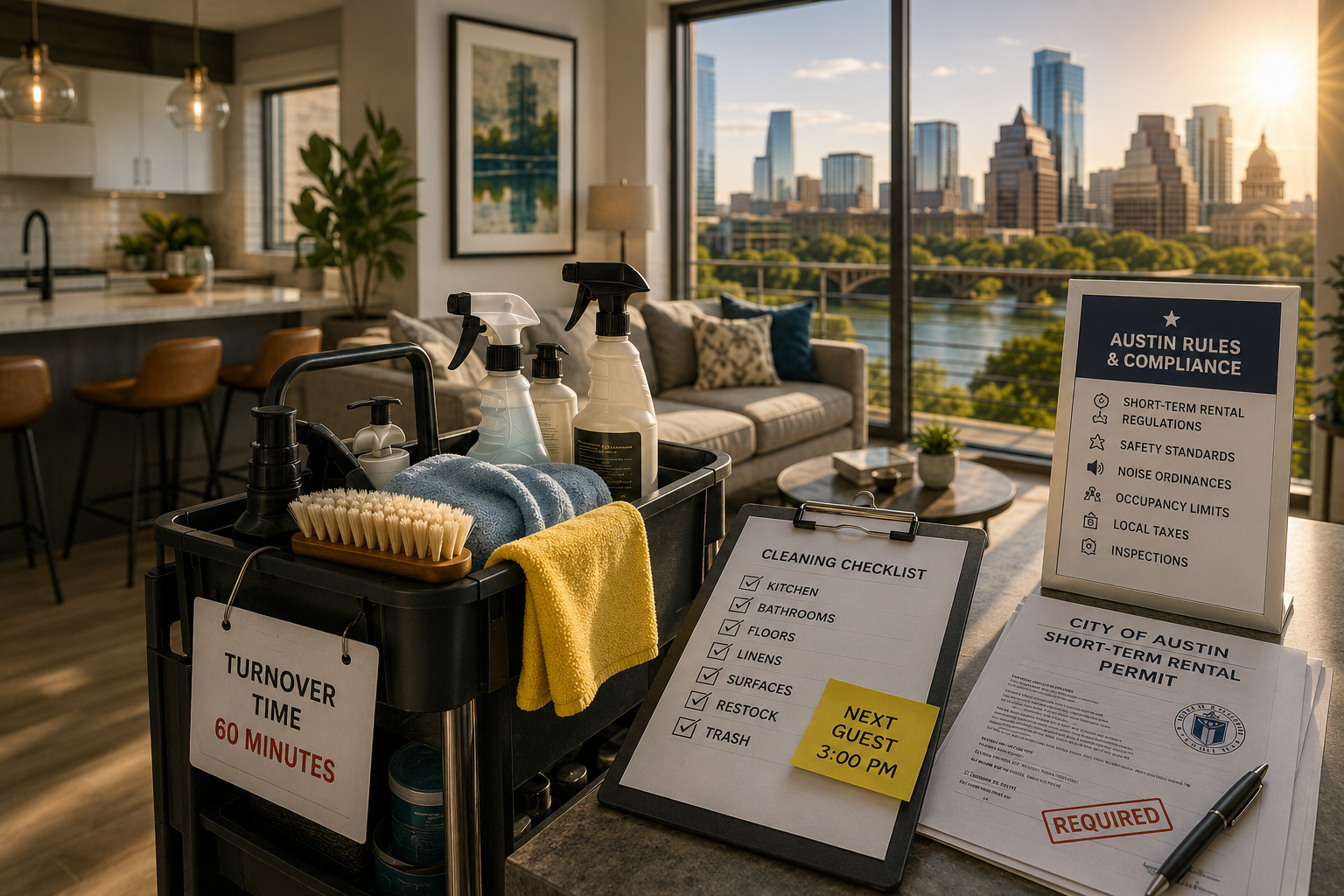
“The climate creates the challenge. Compliance raises the standard.”
Hosting in Austin is not hosting in a slow, dry, low-season town. Two local realities make every turnover harder than the listing photos suggest: the weather and the rulebook.
The climate works against you
Austin sits in a humid subtropical zone — long, hot summers, roughly 34–35 inches of rain a year, and humidity high enough to push the heat index past 110°F on the worst days. Layer on a year-round allergy calendar — mountain cedar, oak, grass, ragweed, plus mold spores and dust mites — and you get a property that fights you in predictable ways.
In practice, that means more entryway grime after a rainstorm, pollen filming the patio furniture and windowsills, lingering moisture in bathrooms, and HVAC vents that show dust faster than they would in a dry climate. None of that is exotic. It's just constant, and it's the difference between a four-star "it was fine" and a five-star "spotless."
The rulebook now ties cleaning to compliance
Austin's regulations raised the stakes in a way many hosts haven't fully absorbed. Every STR needs a city operating license, and your designated local contact must live in the Austin metro area (Travis, Williamson, Hays, Bastrop, or Caldwell County) and be able to respond to an emergency within two hours.
It gets sharper. Starting July 1, 2026, platforms like Airbnb and Vrbo must display a valid license number on every Austin listing and remove unlicensed properties within 10 days of a city request — with fines that can run hundreds of dollars per day. The practical takeaway for this post: the people on the ground at your property are part of your readiness and response system now, not just the folks who make the bed. A reliable local turnover team is one of the cleanest ways to cover that two-hour response window when you're out of town.
The most common Airbnb cleaning problems Austin hosts face
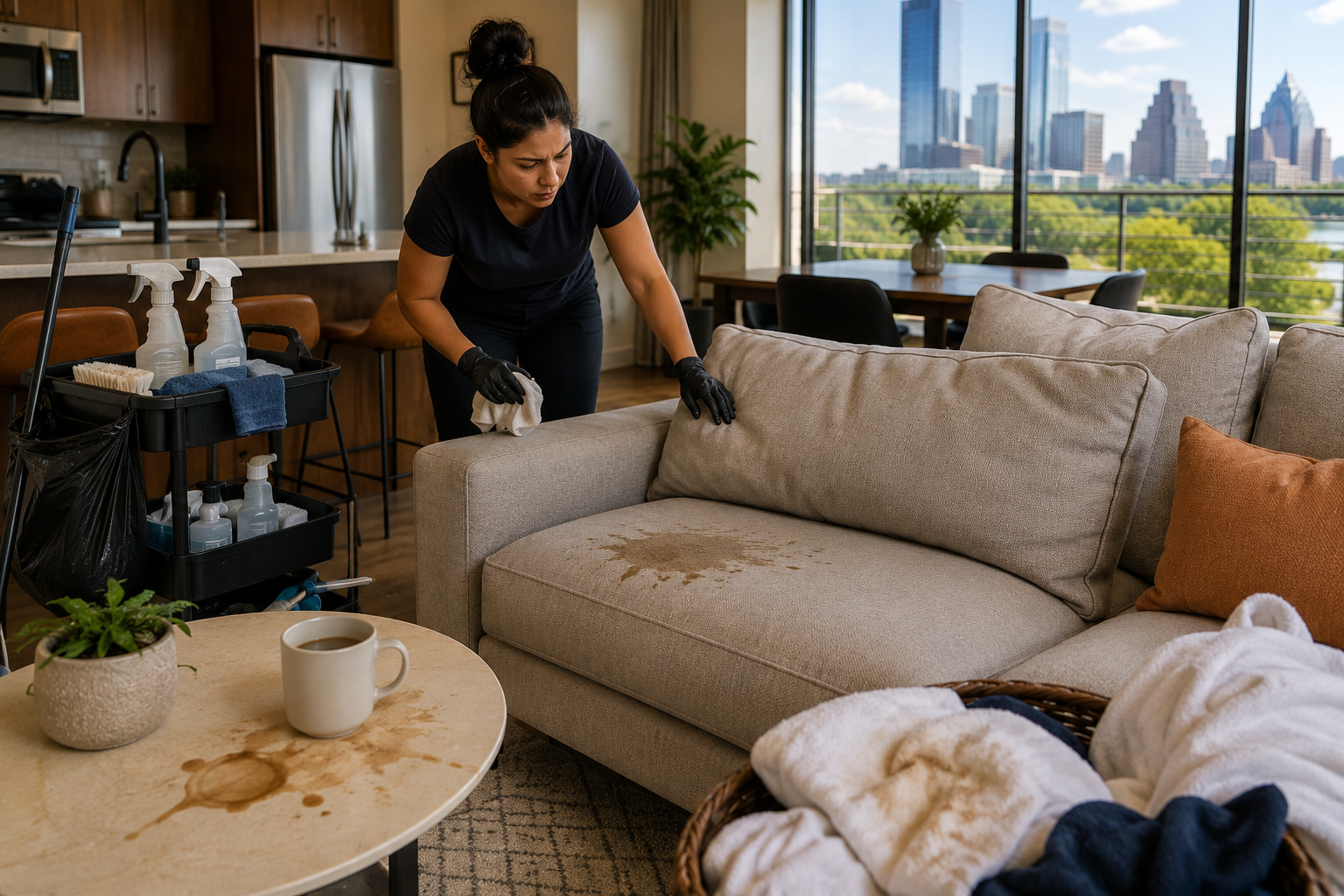
“One unexpected stain can throw off an entire turnover schedule.”
The damage rarely comes from a dramatic disaster. The common Airbnb cleaning problems are small, repeatable misses that stack into a bad review: pollen on the patio set, mud tracked in after rain, bathroom moisture turning into a faint odor, rushed linens on a same-day turn, an empty soap dispenser, a trash can emptied but never re-lined, pet hair buried in the couch. The unit is technically clean — and still not guest-ready.
Airbnb's own host standards require a clean home and a reset between every stay, and its guest rules draw a clear line between normal mess (what your cleaning fee covers) and excessive mess that needs deep cleaning. The three categories below are where Austin hosts lose the most ground.
Timing: the same-day turnover clock
The turnover problems that hurt most are timing problems. A back-to-back booking compresses laundry, staging, supply checks, and inspection into a brutally short window. Airbnb lets you build preparation time between reservations precisely so you're not flipping every booking at the same impossible speed.
Here's the uncomfortable math: if your cleaner has no backup person, no checklist, and no final quality pass, a same-day turnover stops being a routine and becomes a gamble. One late checkout or one stained duvet, and the next guest walks into a half-finished unit.
Red wine on white sheets. Makeup on the bath towels. A pet accident on the rug. Smoke odor that won't quit. Any one of these can derail the next arrival, because the clock doesn't pause while you treat a stain.
Airbnb says guests shouldn't leave a home needing excessive or deep cleaning, and Host damage protection can cover certain unexpected cleaning costs — including some smoke and pet situations. But coverage doesn't reset the turnover clock. You still need someone who knows how to deal with stains in an Airbnb rental fast enough to protect the next check-in.
The one rule that saves the most money: never run a stained item through the dryer before you're sure the stain is gone. Heat sets the stain permanently and turns a recoverable problem into a replacement cost.
Restocking and verification — the part hosts underestimate
This is the quiet killer. A property can be freshly cleaned and still disappoint a guest if there aren't enough towels, no backup toilet paper, or no proof the turnover was actually finished. Airbnb repeatedly ties cleanliness to guest ratings and tells hosts to keep the basics stocked.
So vacation rental cleaning issues and solutions are never just about wiping surfaces. They're about systems — par-level restocking and a final verification step that catches the gap before the guest does.
Vacation rental cleaning issues and solutions that actually work
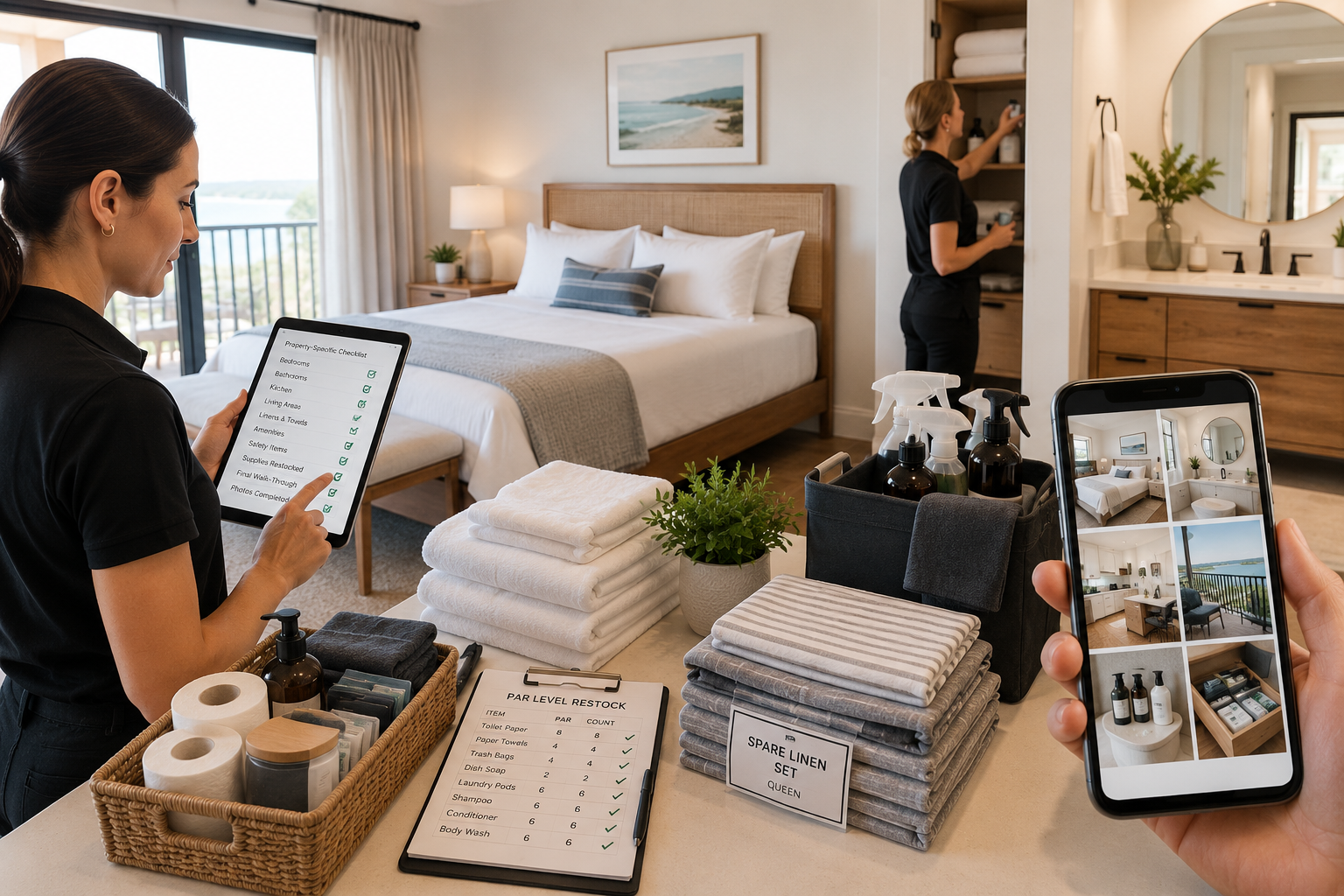
“Small turnover misses can turn into big guest complaints. A smarter process helps catch the details early, protect the check-in, and keep the review experience strong.”
The fix for most STR cleaning problems isn't "clean harder." It's "operate smarter." A turnover that protects your reviews needs six things working together:
A property-specific checklist — not a generic maid routine.
A backup labor plan for when someone calls out on a same-day turn.
A spare linen set per bed, so a stain never blocks a check-in.
A par-level restocking process that treats supplies as a required task.
A final walk-through before the door locks.
Photo documentation so you can verify the turnover remotely.
So what should Airbnb cleaning standards in 2026 actually mean? Skip the buzzwords. The real baseline is Airbnb's current requirement for a clean listing and a reset between every stay, plus the public-health basics: routine cleaning removes most germs, high-touch surfaces get cleaned regularly, and you clean a surface before you sanitize or disinfect it. One operational rule trips up the most people: a disinfectant only works if you follow the label's contact time — spraying and immediately wiping dry does almost nothing.
For Austin listings specifically, treat the exterior as part of turnover quality, not an optional add-on. In a city with pollen, sudden storms, and heavy patio use, the balcony, porch, grill area, and entry path shape the first impression before a guest touches the bathroom. If you want five-star scores, the front door has to match the kitchen.
How to handle Airbnb cleaning between guests without losing your mind
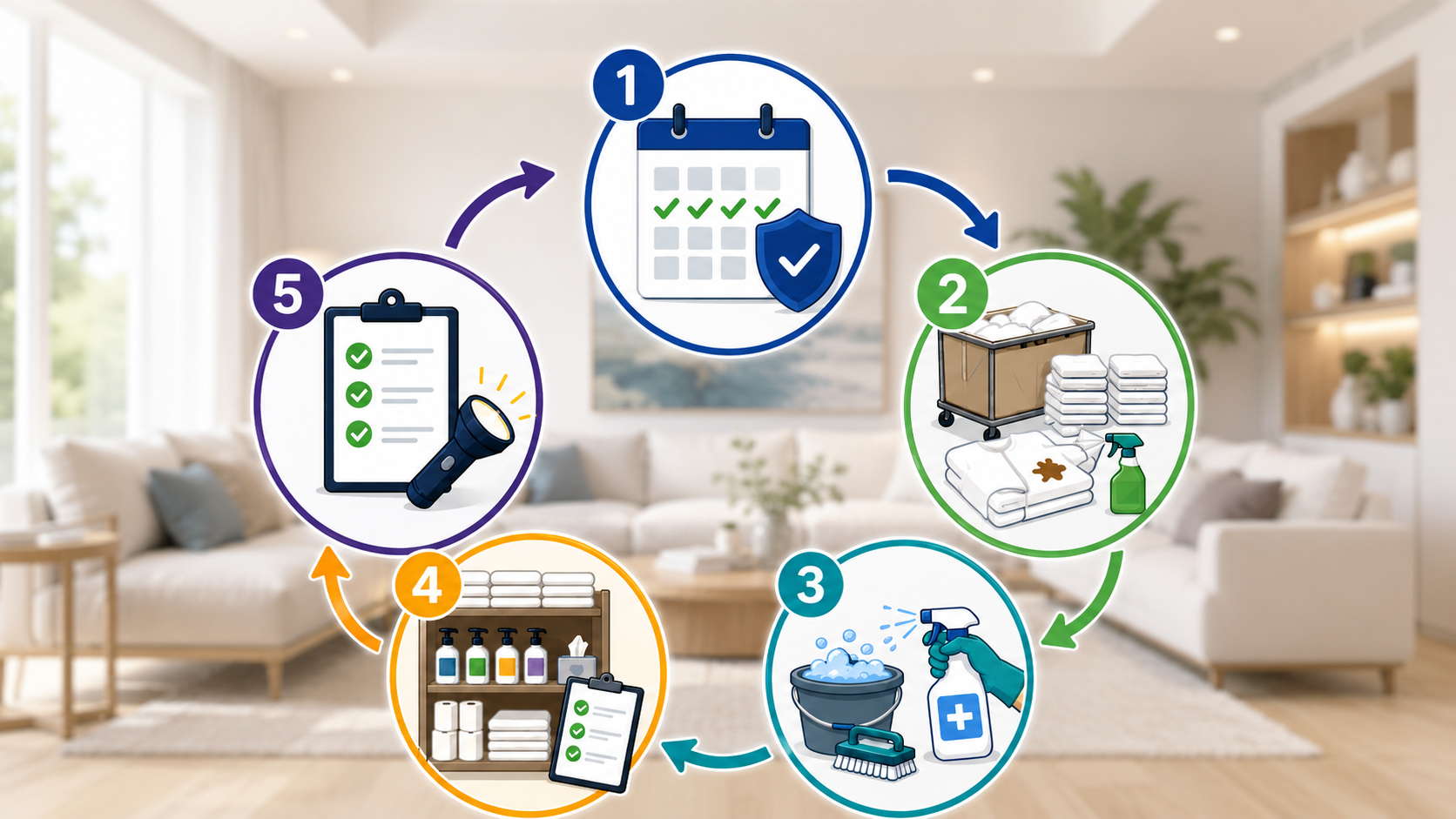
“The checklist matters, but the workflow matters more. A smooth turnover protects time, quality, and the guest experience.”
When hosts ask us how to handle Airbnb cleaning between guests, here's the exact workflow we recommend — five steps, in order.
1. Protect the calendar before you protect the checklist. If your property, team, or booking volume needs prep time, use Airbnb's preparation-time setting instead of pretending every reservation can be flipped at the same speed. This matters most during Austin's crunch weeks — SXSW, UT commencement, ACL Fest, and Formula 1 weekends — when check-ins and checkouts cluster.
2. Strip, sort, and stain-treat immediately. Linens off first, trash out of every bin, dishes collected from every room, and any visible stain treated before heat can set it. (See the dryer rule above — it's the single most expensive mistake to skip.)
3. Clean first, disinfect second — correctly. Clean the surface, then disinfect high-touch points and let the product sit for its full contact time. Moving faster by spraying and wiping dry just gives you the smell of clean without the result.
4. Restock to par, not by guess. Backup linens, hand soap, dish pods, toilet paper, paper towels, trash liners, guest essentials — build them into the turnover as required tasks with a count, not a glance.
5. Verify before the lock closes. A final photo-ready check is what catches the hair on the pillow, the missing trash liner, the half-empty dispenser, the pollen-dusted patio chair, the streaky mirror. This is the heart of managing same-day turnovers you can actually trust. Skip it, and the guest does the inspection for you — in the review.
Short-term rental cleaning mistakes to avoid
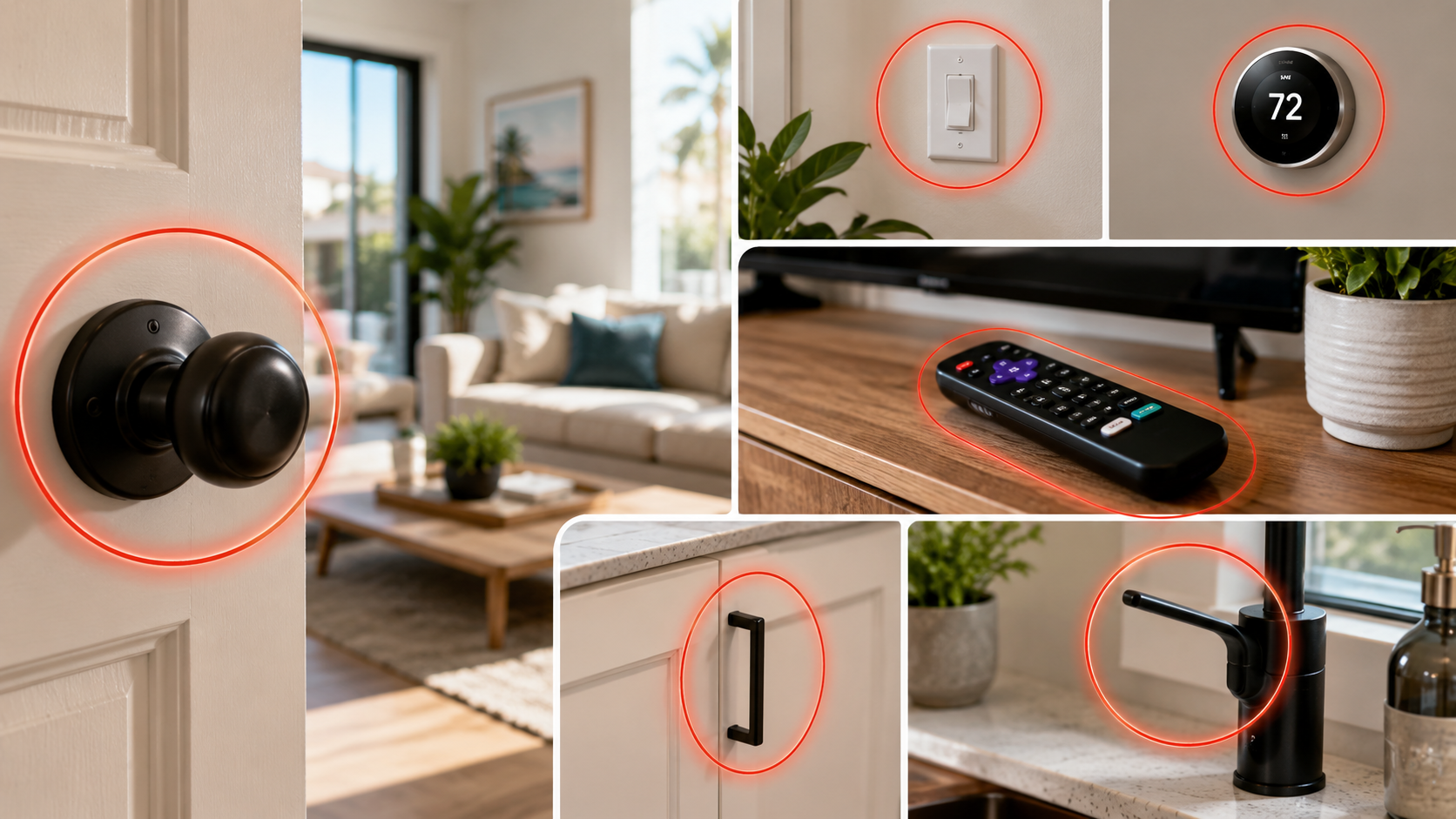
“A spotless stay starts with the surfaces guests touch most. Don’t skip the small details.”
The most common short-term rental cleaning mistakes are remarkably consistent:
Hiring a general residential cleaner with no STR workflow.
Keeping only one linen set per bed.
Skipping photos and QC because you "trust the team."
Understocking supplies during busy weeks.
Ignoring patios and entryways in Austin's climate.
Assuming guests will do chores that Airbnb treats as the host's standard between-stay job.
That last one bites people often. Airbnb is explicit that your cleaning fee is meant to cover standard cleaning between reservations, and you generally can't charge guests extra for failing to do specific checkout chores. In other words, your system has to deliver what your listing promises.
One more pattern worth naming: waiting too long on moisture, odor, or stains because you want to keep the turnover moving. In Austin's humidity, that backfires. If you see a stain, smell mildew, or spot a bathroom ventilation problem, treat it as an operations issue now — not a review problem later.
The deep-cleaning checklist every Austin host should schedule
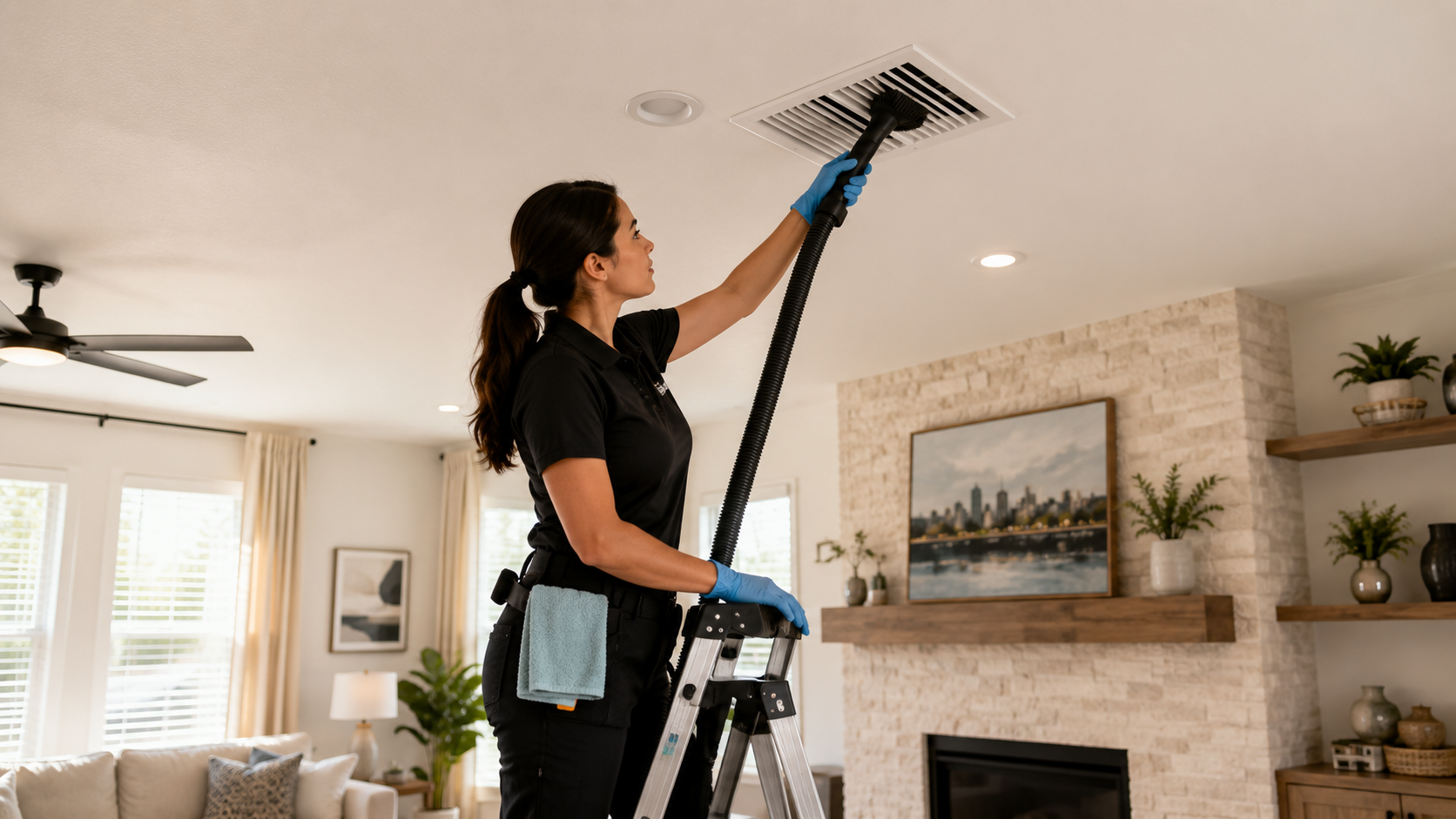
“Fresh vents help create a fresher stay. Don’t let dust buildup affect the comfort of your short-term rental.”
Standard turnovers keep you afloat; scheduled deep cleans keep your reviews high. Put a recurring deep clean on the calendar — monthly and quarterly, not just between guests. For most Austin STRs, that list includes:
Vent covers and HVAC returns
Baseboards and ceiling fans
Under-bed dust and behind furniture
Sofa cushions and upholstery
Window tracks and sills
Grout, caulk lines, and shower-glass buildup
Cabinet fronts and appliance interiors/pull-outs
Mattress protectors
Outdoor furniture, grill zones, and entry surfaces
Frequency varies by occupancy, pets, pool use, and outdoor exposure — but treat deep cleaning as preventive maintenance for your rating, not a rescue mission after bad feedback.
And keep standard turnover separate from abnormal cleanup. If a checkout leaves smoke odor, a pet accident, or unusual stains, you may be out of "standard turnover" territory and into a documented damage-protection claim. That distinction matters for reimbursement and for how fast you can protect the next guest.
When to hire an Airbnb cleaning service in Austin

“If turnovers are getting tight, guest expectations are rising, or cleaning is taking time away from hosting, it may be time to bring in the pros.”
If you're weighing an Airbnb cleaning service in Austin, TX you can actually rely on — or you've literally been typing "short term rental cleaners near me" into Google — judge candidates on four things: STR specialization, documentation, speed, and local response. Austin rewards operators who understand event-driven demand, the climate, backup coverage, and a real final inspection before every arrival.
You should seriously consider outsourcing when you:
Manage multiple properties
Live remotely or travel often
Keep losing same-day turns
Repeatedly miss restocking details
Need a local contact who can also handle inspections and on-the-ground tasks
That's the model we built HappyCleanBnB around. We serve Austin and surrounding areas with STR-focused turnovers, same-day cleans, fresh linens, restocking, pre- and post-clean photos, automated calendar-synced scheduling, manager-level quality checks, and no-contract, as-needed support — from trash-bin roll-out to pool and hot-tub checks to pre-arrival inspections. We're not a general maid service that occasionally cleans Airbnbs. We're an operating partner for hosts who need reliability, speed, and visibility.
The bottom line
Cleanliness in Austin isn't a side task. It's revenue protection, guest experience, local compliance, and brand defense rolled into one. The Airbnb cleaning challenges Austin hosts lose sleep over almost always trace back to the same root cause: a turnover run on improvisation instead of a repeatable system.
So here's your next step. If you're ready to stop gambling on same-day turns, book a free call and we'll help you build a turnover system that fits your property size, booking volume, and check-in windows. Or, if you just want to start tightening things yourself this week, pick one fix from the five-step workflow above and put it on your next turnover.
Which part of your turnover breaks down most — the timing, the stains, or the restocking? Tell us when you book your call and we'll start there.
