

How Often Should You Deep Clean Your Airbnb? A Host's Cleaning Schedule
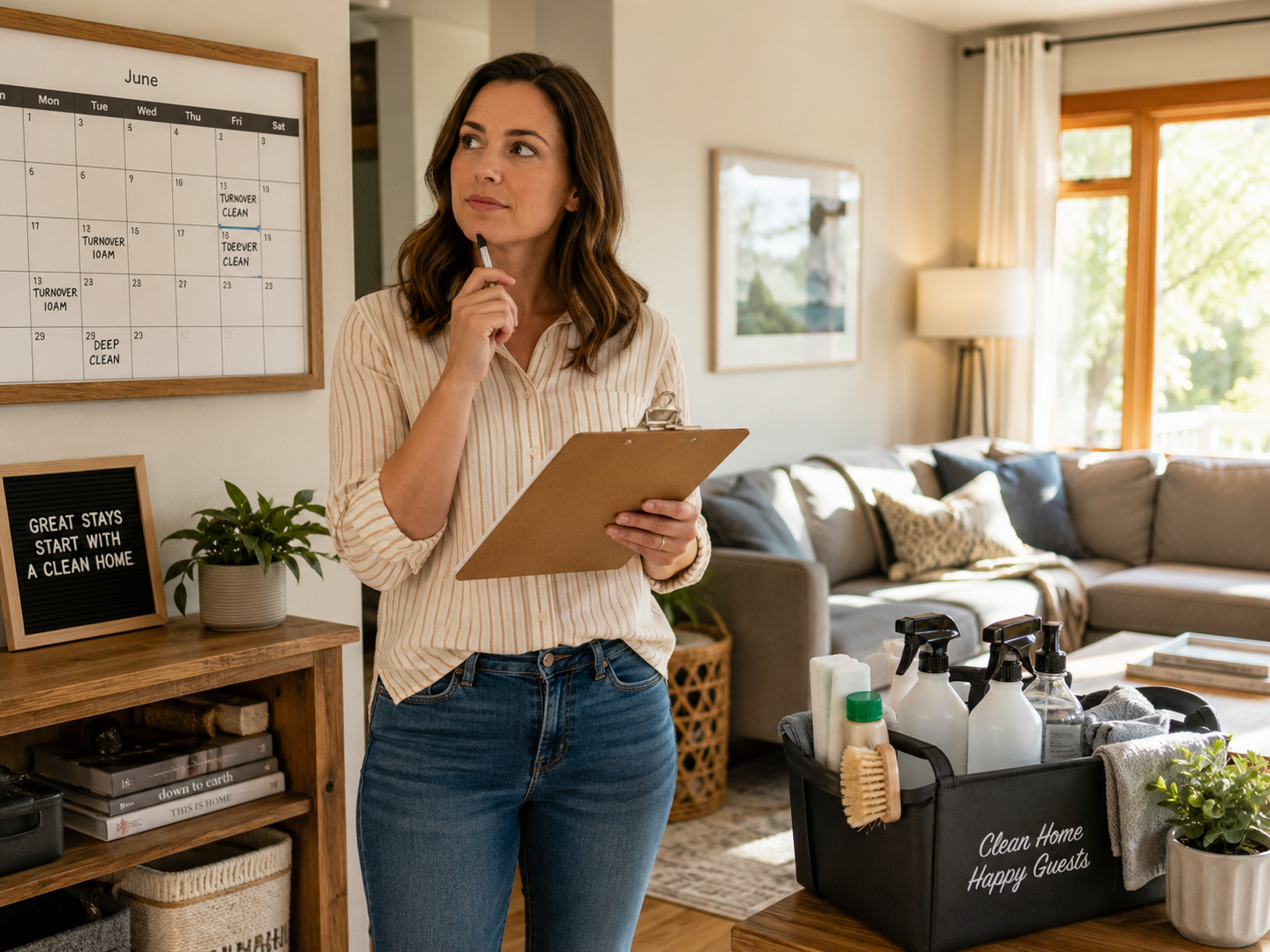
“Host mode: checking the calendar, planning the deep clean, keeping the guest experience spotless.”
Your listing can pass a turnover clean and still be costing you reviews. The grout lines, the vent covers, the film building up on the shower glass — these are the spots a fast changeover never reaches, and guests register them long before the problem ever shows up in your cleanliness rating.
So how often should you deep clean your Airbnb? The short version: a full turnover clean after every checkout, plus a separate recurring deep clean on a monthly or quarterly cadence set by how hard the property gets used. Those are two different jobs. Treating them as one is the mistake that quietly erodes ratings over a season.
Key takeaways
Turnover cleaning and deep cleaning are two separate jobs. A turnover resets the home between guests; a deep clean tackles the buildup a turnover can't reach.
Deep-clean cadence is monthly for high-wear listings, quarterly for lighter-use ones — then layer biannual and annual tasks on top.
The turnover clean is the only part Airbnb actually requires: every guest, every time. The monthly/quarterly deep-clean rhythm is an operations best practice, not platform policy.
Cleanliness is one of the biggest drivers of reviews, and guests have 72 hours to report a cleanliness issue — so the cost of falling behind is direct.
Vacant stretches carry their own risk: the CDC recommends flushing unused faucets and showerheads and keeping hot-tub disinfectant in range even when nobody's booked.
The two jobs hiding inside "cleaning your Airbnb"
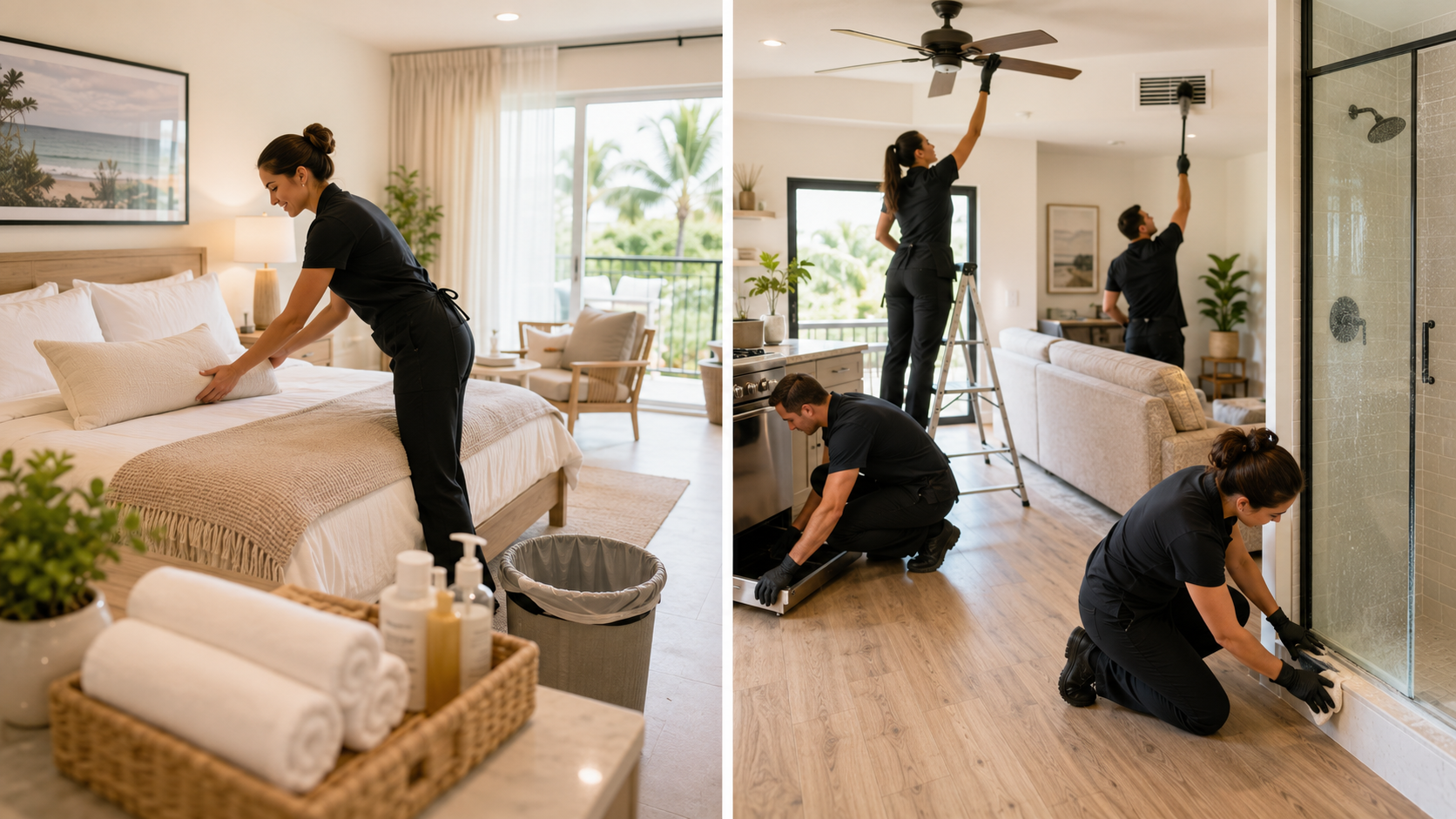
“Smart hosts schedule the quick reset and the quiet maintenance that keeps reviews strong.”
A turnover clean is the guest-to-guest reset: strip and remake beds, restock consumables, sanitize high-touch points, clear trash, clean visible surfaces, stage the space, and inspect before the next arrival. It's fast, it's frequent, and it's the part Airbnb requires — the platform's standard is that a space be thoroughly cleaned between every guest, every time.
A deep clean is the work that doesn't fit in a tight checkout-to-check-in window: moving furniture, cleaning behind and under appliances, detailing grout and shower glass, dusting ceiling fans and vents, refreshing upholstery, and resetting the spots guests don't clock on arrival but absolutely feel over a stay.
The distinction matters financially. Airbnb says a cleaning fee is meant to cover general cleanup after checkout — and hosts can't tack on penalties for guests who skip checkout chores. So your operation has to carry the full between-stay workload on its own, without leaning on guests to pick up the slack. If your only system is the turnover, the deep-clean tasks pile up invisibly until a guest spots them for you.
How often should you deep clean your Airbnb?
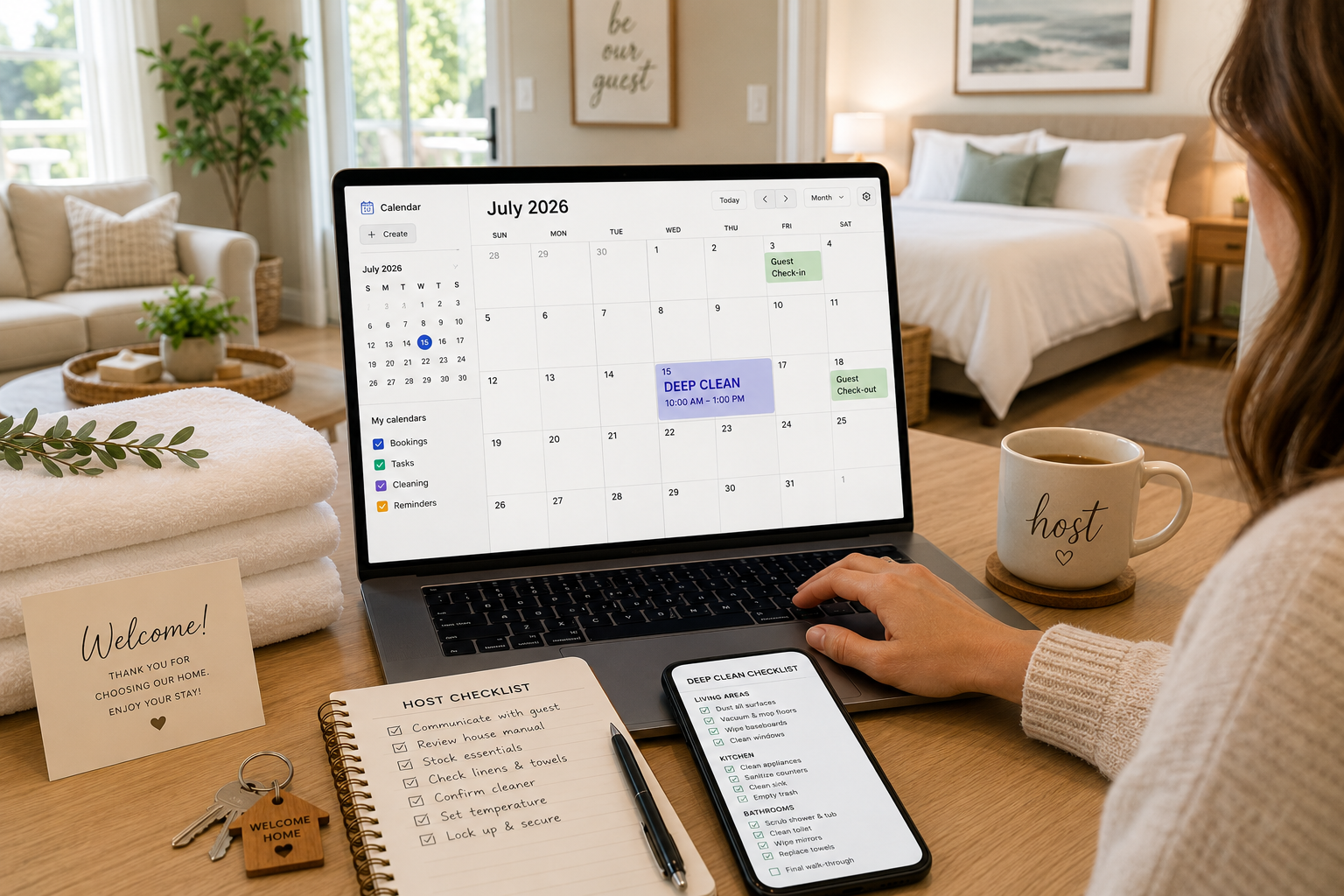
“Behind every guest-ready home is a host who plans ahead.”
There's no Airbnb rule that says deep-clean monthly or quarterly — that part is on you. The cadence below is a best-practice standard drawn from how professional STR operations run, not platform policy. Here's the rhythm we use.
Monthly — for high-wear listings
High-occupancy listings, pet-friendly homes, large-group properties, and anything with heavy outdoor use earn a monthly deep clean. Target the fast-wearing zones: vent covers, ceiling fans, under-bed dust, upholstery touchpoints, shower buildup, cabinet fronts, patio furniture, and entry areas.
Quarterly — for lighter-use listings
Lighter-use homes, or those with longer average stays, can run quarterly as a baseline. This is where HVAC filters get changed, carpets get shampooed where needed, fans and light fixtures get detailed, and the hidden dust and grime zones finally get a real pass.
Biannually
Twice a year: wash windows, clean drains and gutters, deep-clean oven interiors, and refresh doors and baseboards.
Annually and as needed
Once a year, steam-clean upholstery and rotate or flip mattresses. On top of the calendar, trigger an immediate extra deep clean after smoke odor, a pet accident, staining, or any checkout that leaves the home beyond normal wear.
What sets your cadence isn't a formula — it's occupancy, pets, guest count, outdoor exposure, and how fast your specific home shows wear. A four-bedroom that hosts ten-person groups every weekend is a different animal from a one-bedroom with week-long stays.
The turnover cleaning checklist (every stay)

“A spotless stay starts before check-in. Fresh linens, stocked essentials, sanitized surfaces, and every space reset with care—because great guest experiences begin with a clean, welcoming home.”
Start with linens, because that's where Airbnb's own guidance starts: strip the beds and get a load of laundry going first. From there, work the home in a fixed sequence so nothing slips and the final walk-through stays quick and reliable.
Kitchen: Empty the fridge; wipe counters, cabinet fronts, appliances, backsplash, sink, and fixture handles; clean inside the microwave; empty and re-line the trash; check coffee, tea, dish soap, pods, paper towels, and sponges to par level.
Bathrooms: Scrub toilet, sink, shower, and tub; wipe mirrors; clear hair from drains; clean and then sanitize faucet handles, flush levers, and switches; replace towels; restock toiletries and toilet paper.
Bedrooms: Strip every bed, inspect linens for stains, remake with fresh sets, dust nightstands and lamps, check under beds, and stage pillows and throws the same way every time.
Living areas: Dust surfaces, wipe remotes and switches, vacuum rugs and upholstery, spot-clean visible stains, and reset décor so the room photographs well.
Entry and outdoor: Sweep the entrance, wipe the front door and handles, clear debris, and check patios, balconies, and outdoor furniture so the first impression matches the inside.
One sequencing detail worth building into the routine: the CDC recommends cleaning surfaces before sanitizing or disinfecting, because cleaning physically removes most of the germs first. Disinfectant then needs to stay wet on the surface for the contact time on its label to actually work. Spraying a dirty surface, or wiping the product off too soon, is wasted effort.
The deep cleaning checklist (monthly to annually)
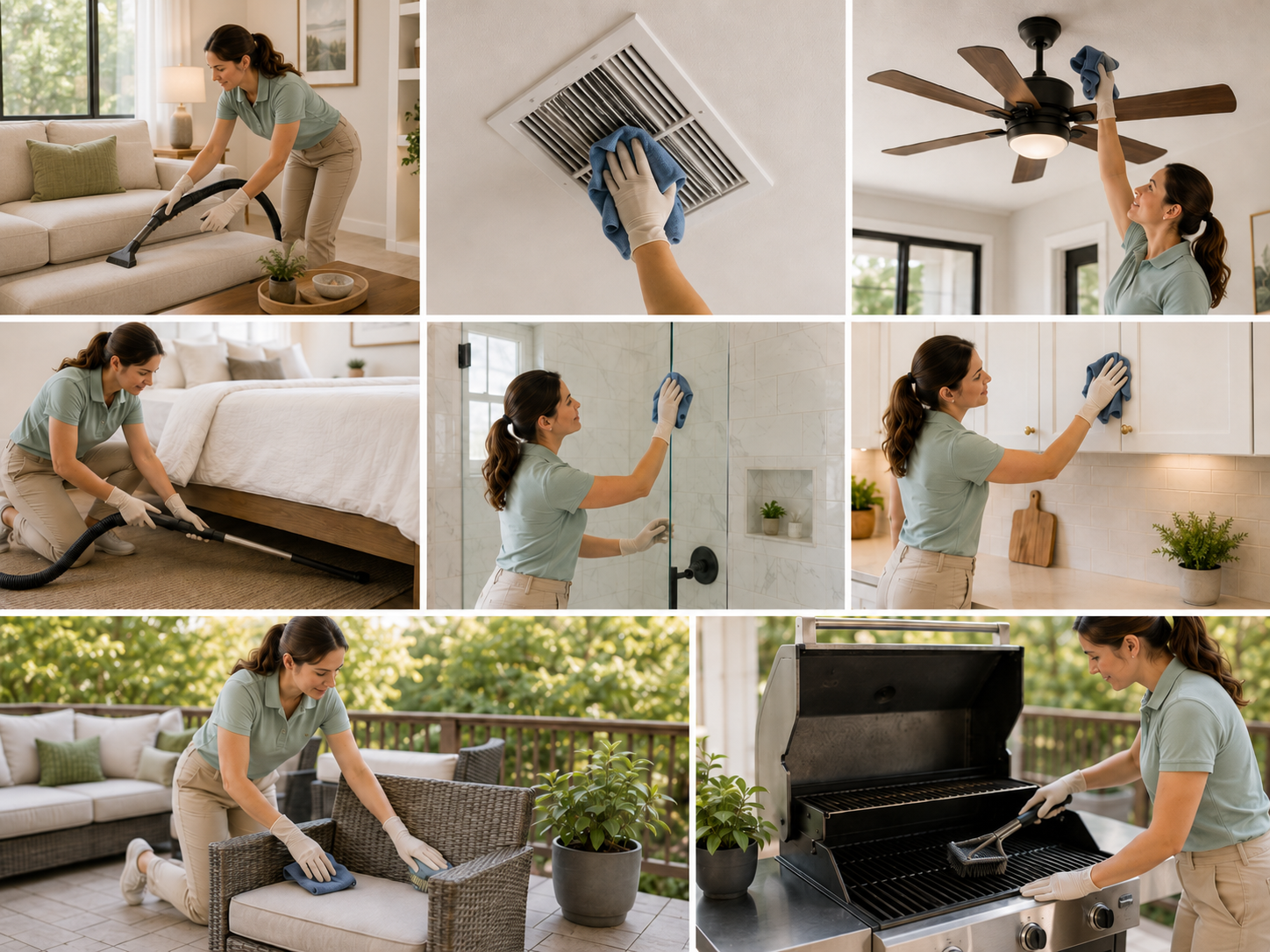
“A great stay starts with a home that’s cleaned beyond the surface.”
Your deep-clean list should target everything a turnover can't reach in a tight window: vent covers and HVAC returns, baseboards, ceiling fans, under-bed dust, behind furniture, sofa cushions, window tracks and sills, grout and caulk, shower-glass buildup, cabinet fronts, appliance interiors, mattress protectors, and outdoor furniture or grill areas.
This is usually where hosts realize a standard residential house cleaner isn't quite the right fit. Deep cleaning a short-term rental is operational work, not just housekeeping — you're protecting the next arrival, the next review, and often a same-day turnover, all at once.
The cleaning task most hosts forget: vacant-property water safety
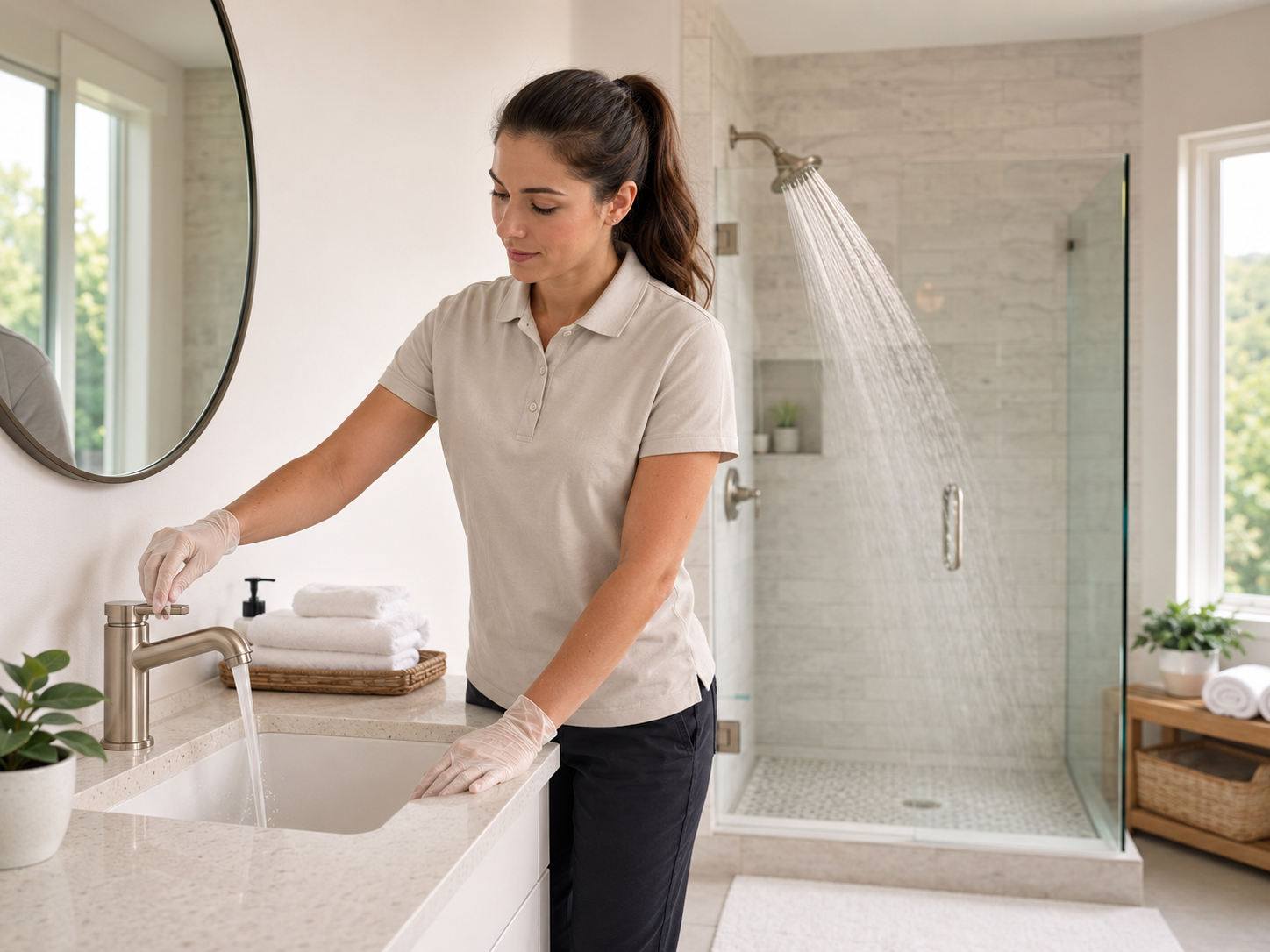
“Running faucets and showerheads after a vacancy is a simple habit that supports a safer guest experience.”
Here's the one that almost never makes it onto a cleaning schedule — and it's the kind of detail that separates a professional operation from an amateur one. When a property sits empty, its water system sits stagnant too. Warm, still water in pipes, showerheads, and hot tubs is exactly where Legionella bacteria grow.
The CDC's guidance for vacation-rental owners is specific. If faucets or showerheads haven't been used for a week or more, flush them shortly before guests arrive. If you have a hot tub, keep it in range even when no one's using it: free chlorine 3–10 ppm, bromine 4–8 ppm, and pH 7.2–7.8. The CDC also recommends keeping the water heater at 120°F or higher to limit bacterial growth.
None of this shows up in a guest review — until it does, in the worst possible way. Folding a two-minute water-system check into your reopen routine after any vacancy is cheap insurance against a problem that's expensive in every sense.
When an Airbnb deep cleaning service starts to pay off
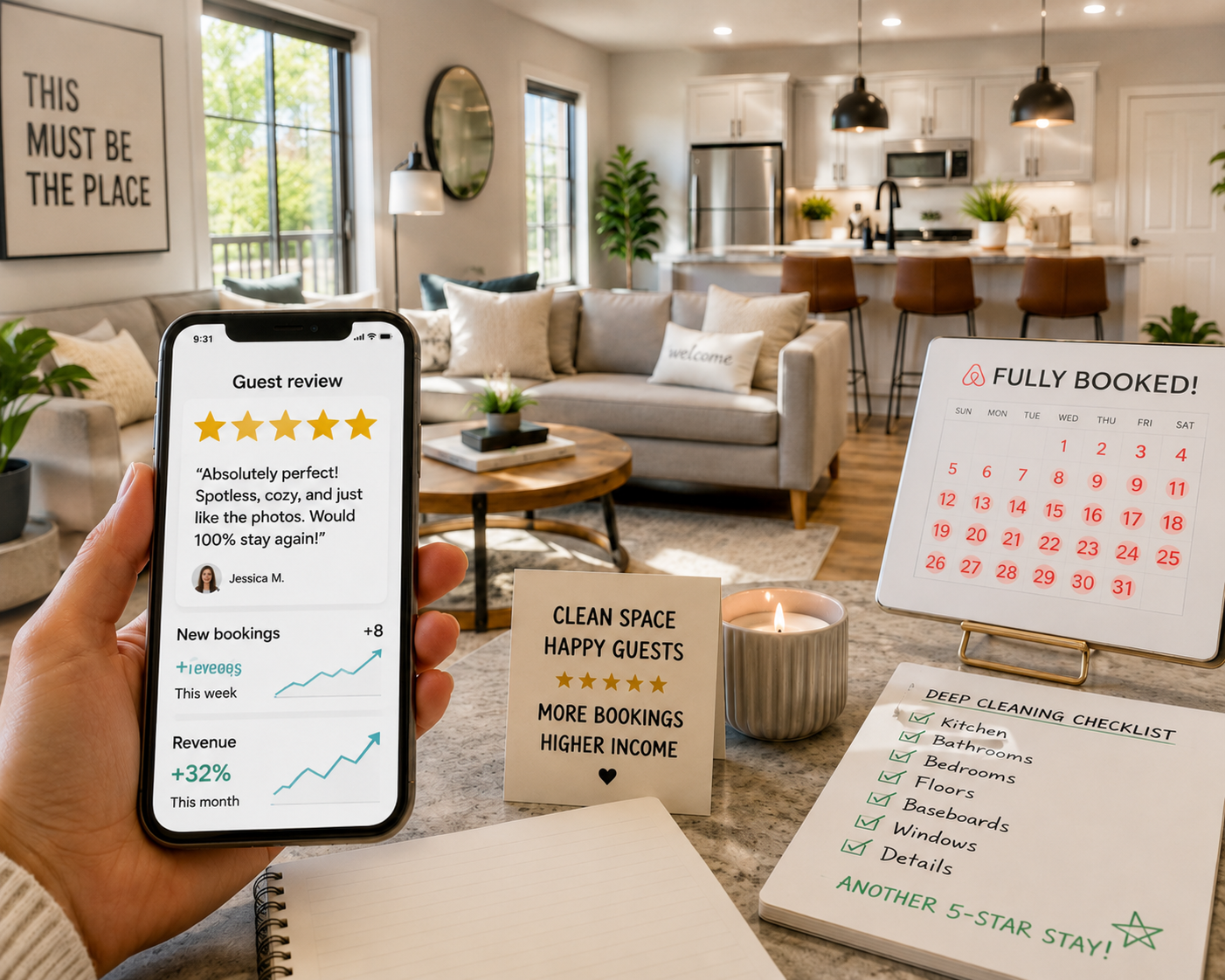
“When your Airbnb is spotless, the reviews show it. ✨ Deep cleaning turns clean spaces into happy guests, 5-star stays, and more bookings.”
The math tips toward outside help at a few clear signals: your calendar's full, your cleaner has no backup, laundry has become the bottleneck, or the home needs more than a wipe-down between guests. Airbnb itself advises building enough time between bookings and having a backup plan for when a cleaner can't make it — and a reliable backup is hard to guarantee when you're running solo.
For Austin hosts specifically, this is the gap HappyCleanBnB was built to fill. We work entirely with Austin short-term rentals, and the service is built around the things that actually protect a listing: same-day turnovers, fresh linens, restocking to par, photo-ready quality checks, before-and-after documentation, incident reporting, and scheduling synced to your reservation calendar. We also handle the operational extras — trash bin roll-out, lawn and brush upkeep, pool and hot-tub checks, minor handyman items, supplies management, and pre-arrival inspections.
If you've been looking for an Airbnb cleaning service in Austin, what you usually need isn't a residential cleaner. It's an STR partner who understands tight turnovers, staging, restocking, and review protection — with no-contract scheduling for one-off or recurring work.
Put the schedule on autopilot
A cleaning schedule only protects your reviews if it actually runs — and that's the hard part to sustain solo, between full calendars and same-day turns. If you host in Austin and you'd rather have the turnovers, recurring deep cleans, and operational backup handled, book a free call with HappyCleanBnB and we'll build the rhythm around your calendar.
