

How to Remove Smoke Smell From an Airbnb Fast: A Turnover Playbook
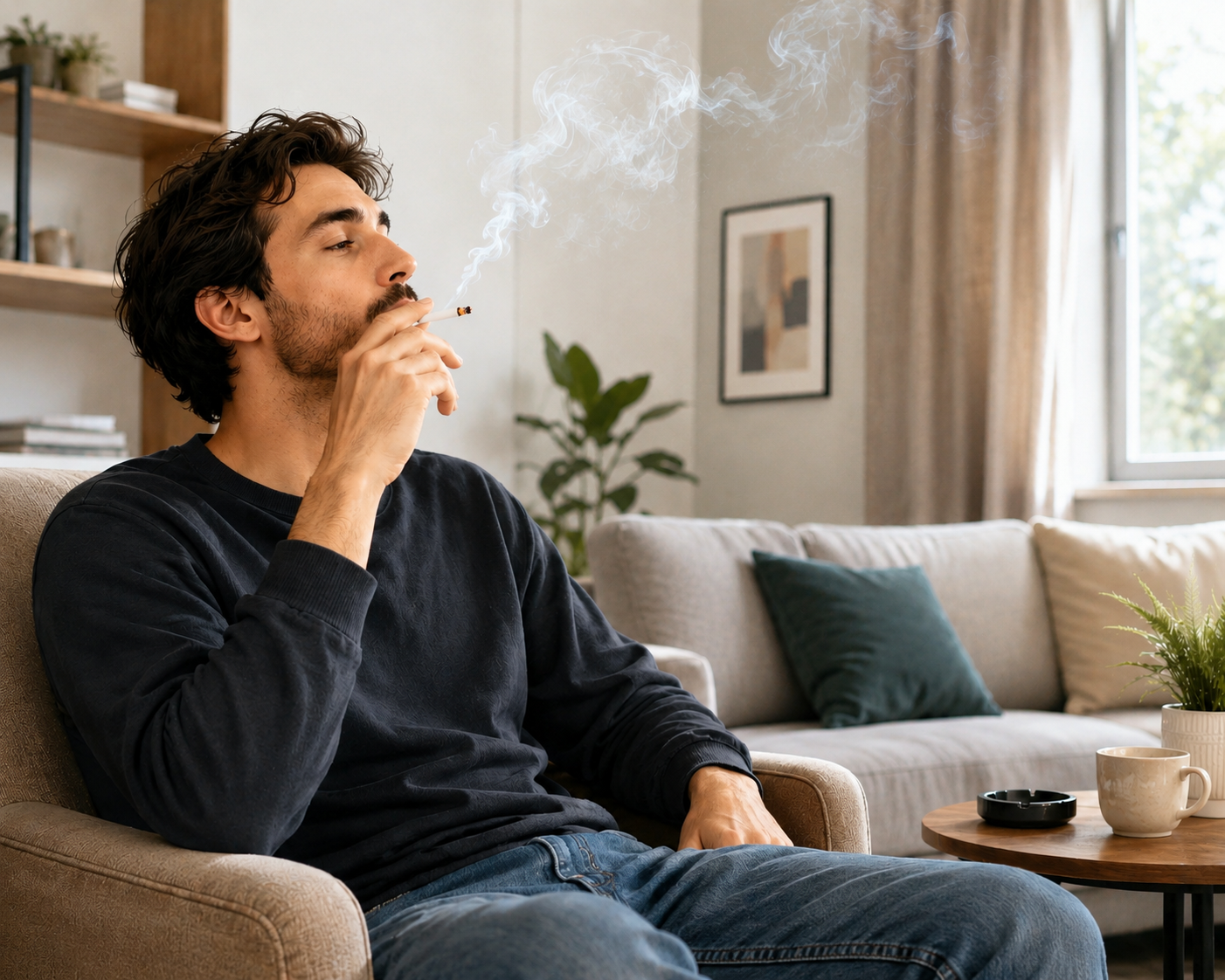
“Smoke residue can travel through a room and settle where it’s hardest to remove.”
One cigarette break on the balcony can cost you a five-star review. Smoke is one of the few odors a guest clocks the second they walk in — and one of the few that shows up in reviews by name. The frustrating part is the math: you usually have a three- to four-hour turnover window to undo something the last guest spent two days creating.
Here's the good news. You can clear most smoke odor in a single turn if you work in the right order — airflow first, deep cleaning second, odor-neutralizers last. This guide covers how to remove smoke smell from an Airbnb fast: what realistically fits in a same-day turn, what needs a vacant day, and when calling a pro is the cheaper move.
Key takeaways
Ventilate the instant the guest leaves. Open everything, run fans pointing out the windows, and swap the HVAC filter. This alone clears most airborne smoke — and it's free.
Smoke isn't only in the air. It bonds to walls, fabric, grout, and your HVAC. Wipe hard surfaces, wash every textile, and treat carpets and upholstery, or the smell returns by check-in.
Finish with an enzyme-based neutralizer, not an air freshener. Fragrance masks the smell; enzymes break the odor molecules apart so it doesn't come back.
Ozone works on heavy, set-in smoke — but only in a fully vacated, sealed space. Never run it during occupancy. Budget a vacant day or hire it out.
Know when to escalate. Visible stains, a smell that returns after airing, or repeat smoking damage are your signals to bring in a remediation pro.
Why smoke smell is so stubborn
“Even one lit cigarette can release smoke that clings to the room.”
Smoke doesn't just hang in the air — it settles. The particles are fine enough to embed in drywall, grout, upholstery, curtains, and your HVAC system, where they keep releasing odor for days. Public-health researchers even have a term for the residue left behind on surfaces after the visible smoke clears: thirdhand smoke, the nicotine and chemical film that coats everything in the room.
That's why air freshener never fixes it. You're perfuming over a source that's still actively off-gassing. To get smoke smell out of an Airbnb for good, you have to pull it from three places: the air, the surfaces, and the fabrics. Skip any one of them and the odor comes right back.
Step 1: Ventilate and clear the air (do this first)
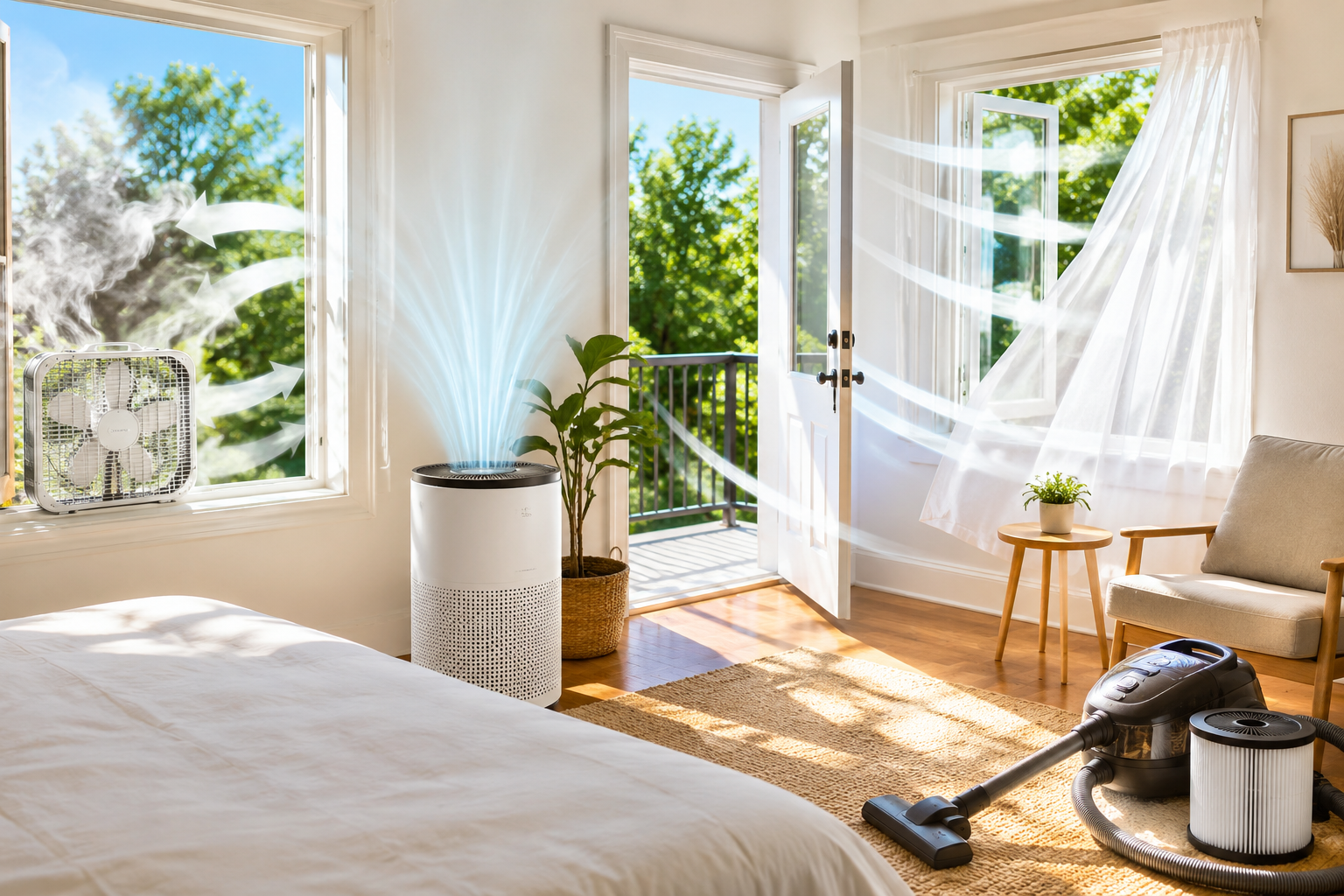
“Start smoke odor removal by pushing stale air out and bringing fresh air in.”
The moment the guest checks out, open every window and door and set a box fan in a window facing outward so it pushes smoky air out rather than circulating it. This single step dilutes most of the airborne odor before you've lifted a cleaning cloth — and it costs nothing.
While the room airs out, run an air purifier or vacuum with a true HEPA filter. A true HEPA filter captures 99.97% of particles down to 0.3 microns, which is small enough to grab the fine particulates that carry smoke odor. Models with an added activated-carbon stage are worth it here, since carbon is what actually adsorbs the gas-phase smell rather than just the particles.
Then change the filters. After a smoking incident, a clogged HVAC or vacuum filter just re-emits the odor it trapped. Swap the HVAC filter immediately and either replace or HEPA-vacuum the unit's filter. It's a two-minute job that prevents the smell from quietly recirculating for the next week.
Step 2: Wipe down every surface
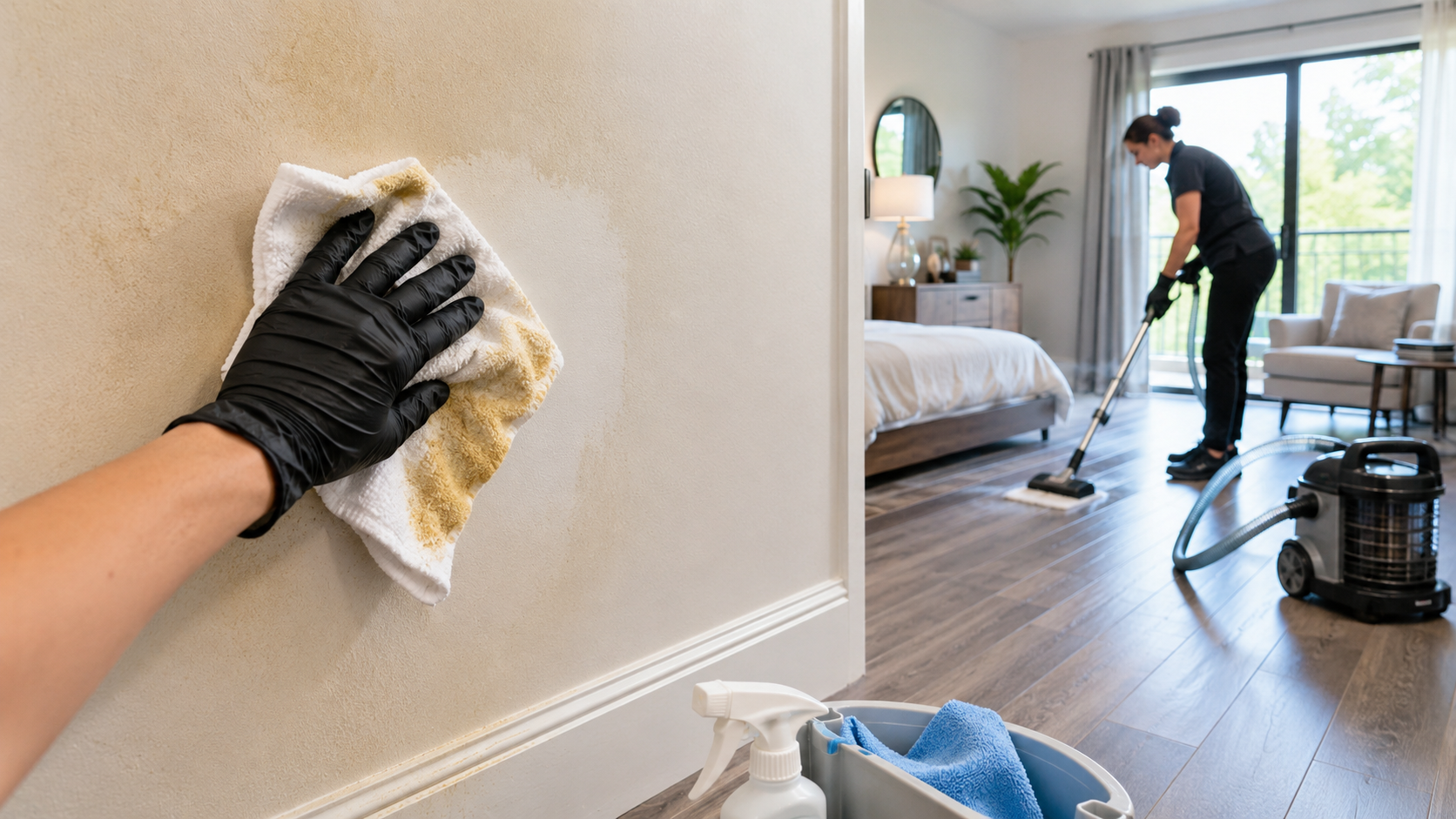
“Invisible smoke film becomes visible the moment you wipe it down.”
Once the air is moving, go after what the air left behind. Smoke residue clings to walls, ceilings, trim, baseboards, and hard floors — and a thin, invisible coat is enough to keep a room smelling like an ashtray.
Wipe walls and ceilings with warm water and white vinegar, or a cleaner formulated for smoke and soot. Pay extra attention to kitchen and bathroom finishes, baseboards, and the tops of trim, where film builds up unnoticed. For visible soot, switch to a spray-and-scrub approach or a wall steamer to lift the deposits rather than smearing them.
One safety note worth stating plainly: use one cleaner at a time, and never mix products. Vinegar or ammonia combined with bleach releases toxic gas. Pick a single approach, work the surface thoroughly, and repeat if a swipe of a clean cloth still picks up residue.
For floors, steam-clean or deep-mop hard surfaces with a cleaner that targets organic residue, and steam-clean grout if it's gone yellow. Vacuum carpets with a HEPA machine, moving furniture to reach what's underneath — smoke settles in exactly the spots you can't see.
Finish the surfaces with an enzyme-based or oxidizing odor neutralizer applied as a mist or fog. Unlike a scented spray, these products bond with and break down the odor compounds, and they keep working after you've left the unit. That's the difference between a room that smells clean at handoff and one that smells smoky again by the time the guest's key works.
Step 3: Wash fabrics and deploy odor absorbers
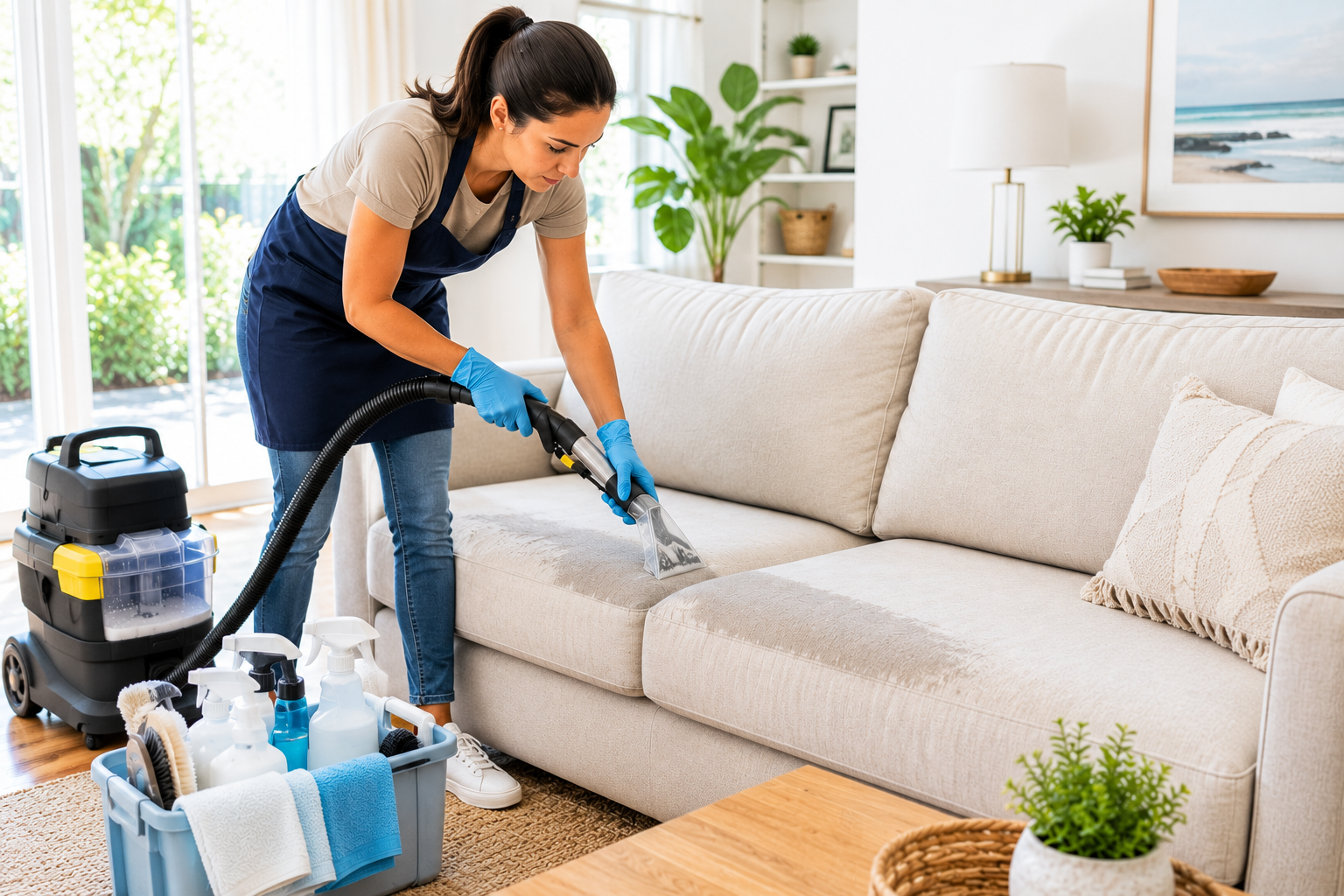
“Smoke hides deep in upholstery — extract it from the fabric before the next guest arrives.”
Textiles are where smoke hides longest. Strip the curtains, linens, pillow covers, and towels and wash them hot with detergent, adding a cup of white vinegar to the rinse to cut residue. For upholstered furniture, rugs, and cushions you can't toss in a machine, steam-clean them with an enzymatic cleaner so you're breaking the odor down, not pressing it deeper.
Two absorbers earn their place in your turnover kit:
Baking soda sprinkled generously on carpet, rugs, and upholstery, left to sit, then vacuumed up. It lifts trapped odor molecules cheaply. The catch: it needs time — ideally overnight — to do its job.
Activated charcoal bags set around the unit pull lingering odor from the air between cleanings. Refresh them weekly if the smell is heavy.
Skip the coffee-grounds-and-dryer-sheets trick as anything but a stopgap. It masks a weak residual scent for a few hours; it does nothing to the source. If smoke is the actual problem, it'll resurface.
What fits in a same-day turn vs. what needs a vacant day
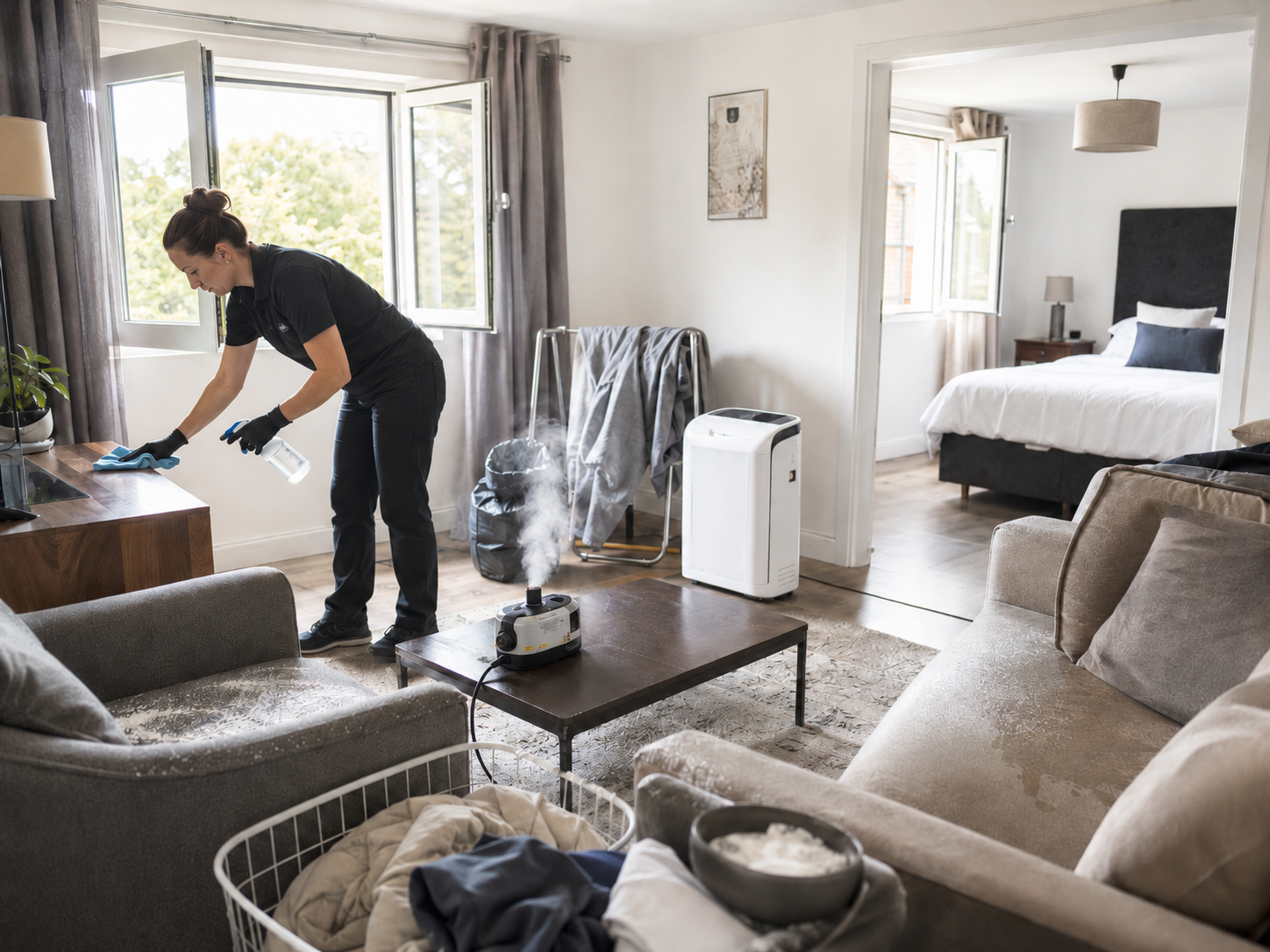
“Light smoke odor can often be handled in a tight turnover window — long-term smoke damage should never be rushed.”
Be realistic about your window. In a three- to four-hour turn, you can ventilate, wipe surfaces, wash fabrics, run the purifier, and fog a neutralizer — that handles light to moderate smoke. What you can't rush is the stuff that needs dwell time: an overnight baking-soda treatment, full upholstery drying, or an ozone shock. If the unit reeks of long-term, set-in smoke, block a vacant day rather than gambling on a same-day handoff and a one-star surprise.
Advanced treatment: ozone (and how to use it safely)
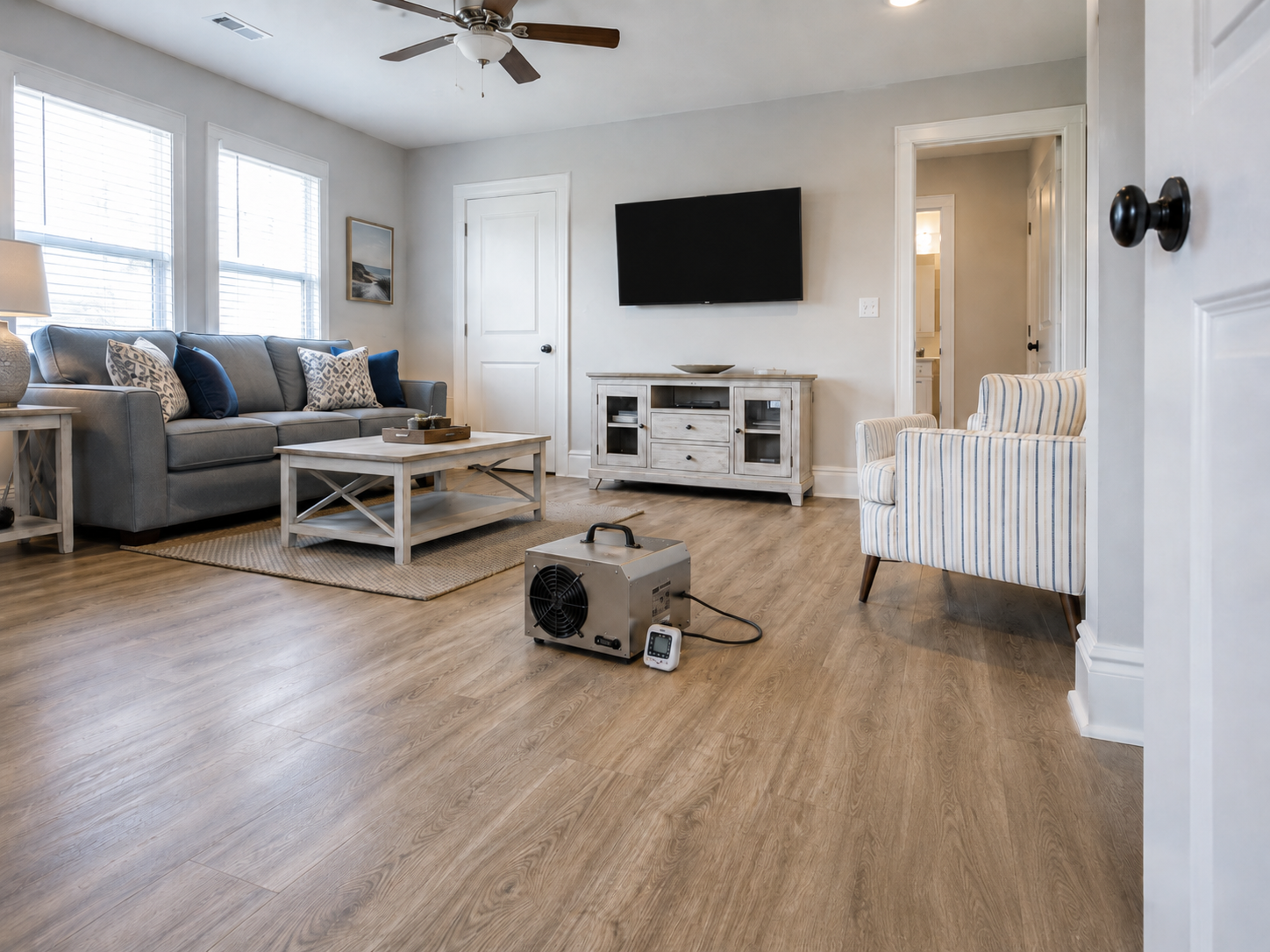
“For stubborn smoke odor, ozone can help — but only when the unit is empty, controlled, and given enough time to ventilate afterward.”
When DIY cleaning isn't enough for heavy, set-in smoke, ozone is the tool the pros reach for. An ozone generator floods the space with O₃, a reactive gas that oxidizes smoke compounds and neutralizes the odor at its source rather than covering it.
Here's the part most guides gloss over: ozone is a lung irritant, and it is only safe in an empty space. The EPA is explicit that no federal agency has approved ozone generators for use in occupied rooms, and that the levels needed to destroy smoke odor are above what's safe to breathe. That doesn't make ozone useless — the EPA also acknowledges it can remove smoke odors in unoccupied spaces, which is exactly the scenario between guests. It just means the rules are non-negotiable.
If you run ozone yourself:
Remove all people, pets, and plants, and clean surfaces first so the ozone isn't wasted on grime.
Seal the room, set the timer, and leave.
After the cycle, ventilate hard — open windows and run fans for at least 30 to 60 minutes — before anyone re-enters.
On cost: residential ozone units run roughly $70 to $500, and renting one runs about $30 to $100 a day if this is a one-off. For a host who turns a smoking-prone unit a few times a year, owning one can pay for itself against repeat professional visits. California's Air Resources Board advises against home ozone use altogether on health grounds, so if you're not confident you can fully vacate and ventilate the space, this is a job to hand off.
When to call a professional
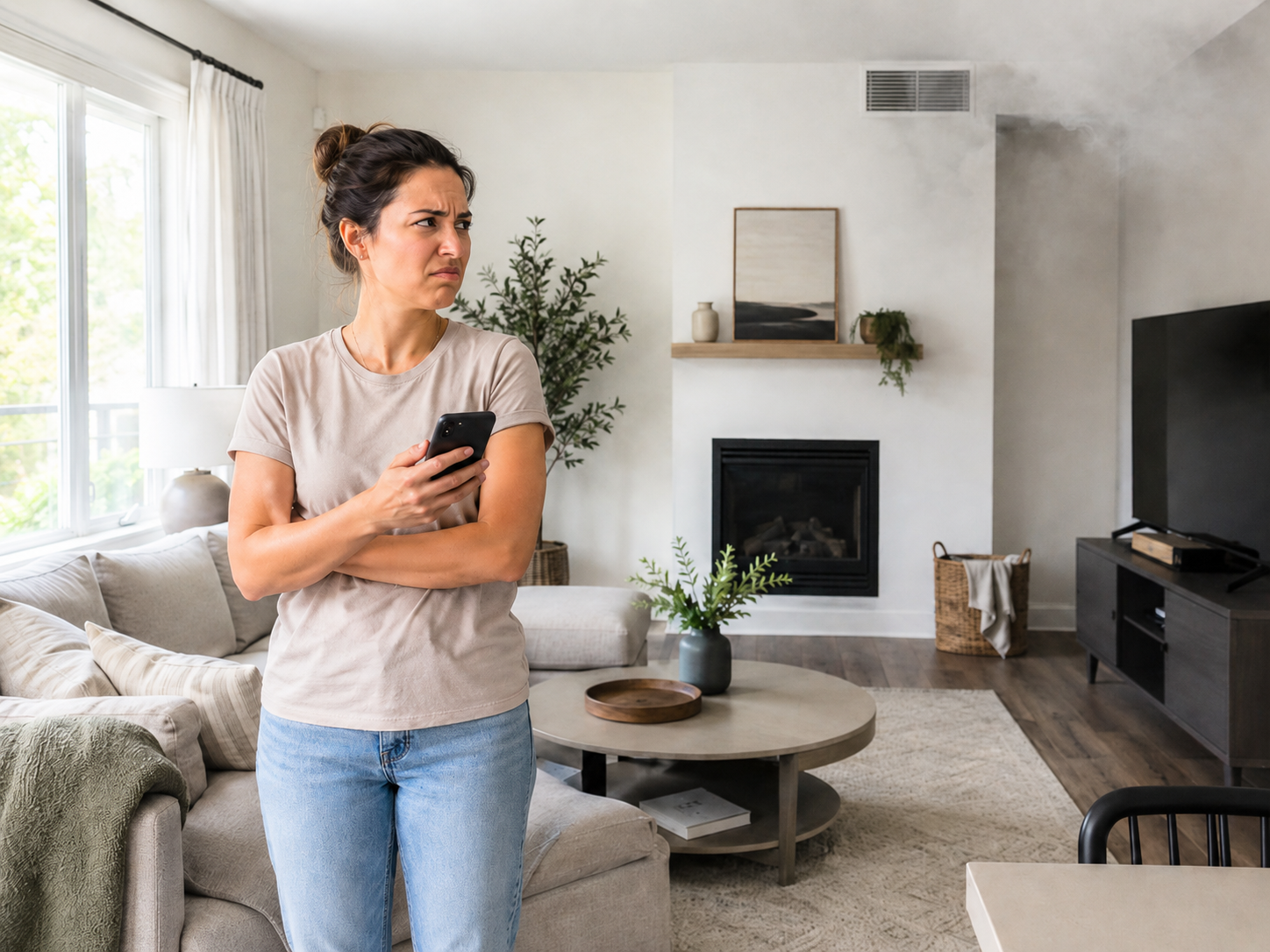
“When smoke odor keeps coming back after cleaning and airing out, it may be time to stop guessing and call a remediation professional.”
Some smoke damage is past the point of a turnover kit. Call a remediation specialist when you see visible smoke stains or burn marks, when repeated cleaning doesn't kill the odor, or when the smell returns shortly after the room airs out. Those are signs the residue has saturated drywall, HVAC, or padding beyond what surface cleaning reaches.
Pros bring equipment you can't buy off a shelf — thermal foggers that force odor gases off walls, high-powered HEPA vacuums, and industrial ozone units — plus the experience to ventilate the space safely afterward. Professional ozone smoke treatment averages around $600 and ranges from roughly $200 for a single room to $3,000 for whole-home, multi-treatment jobs. Against a string of damaged reviews and blocked calendar days, that's often the cheaper outcome.
Get smoke smell out of your Airbnb fast — without losing the booking
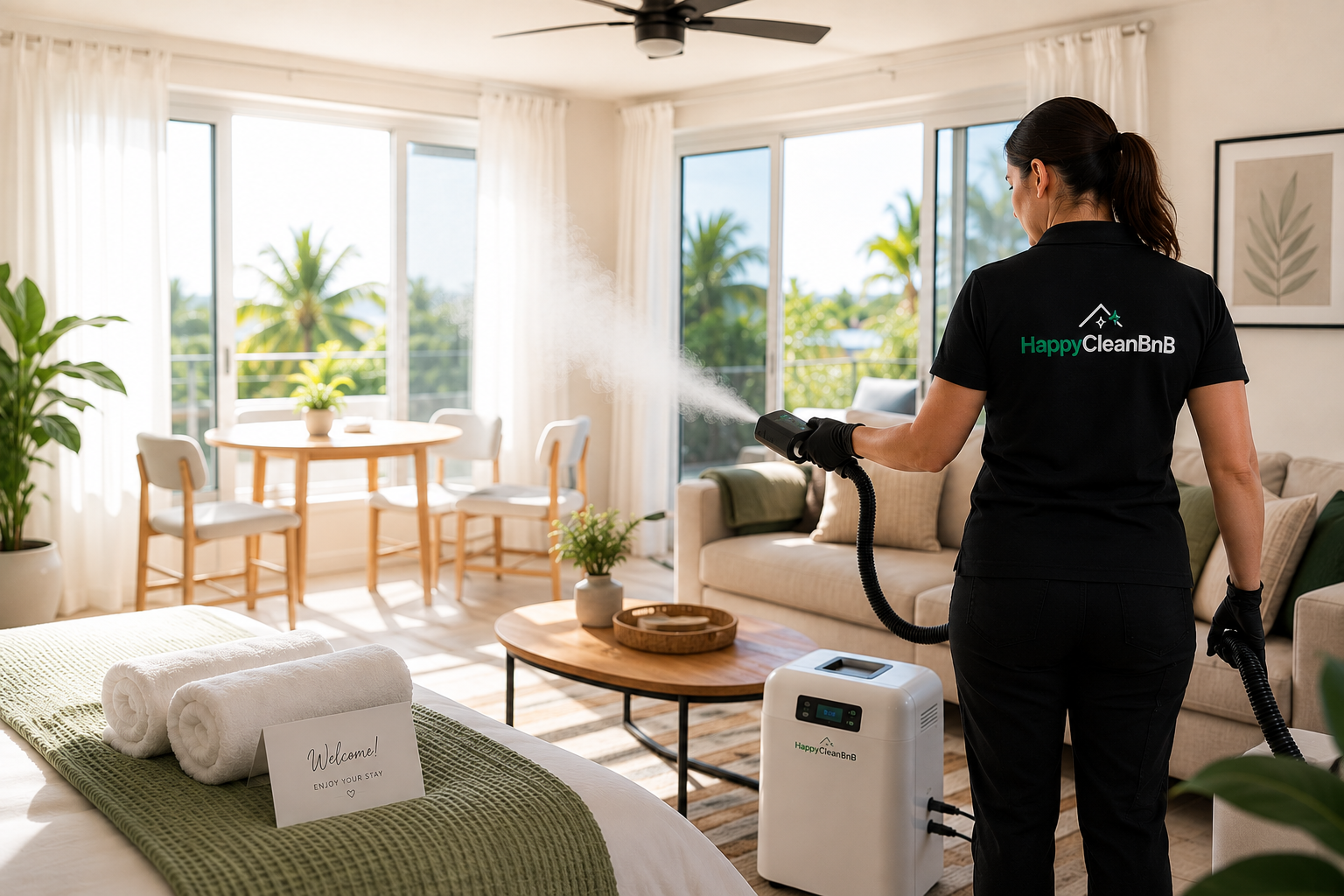
“Book your smoke-odor turnover today and keep every stay smelling like a five-star welcome.”
If you host in Austin, you don't have to choose between a fast turn and a truly smoke-free unit. HappyCleanBnB is a short-term-rental cleaning service built for back-to-back turnovers and deep cleans, including odor and stain removal. We fold the extra deodorizing steps — enzyme cleaning, fogging, fresh linens, HVAC filter swaps — into the turnover itself, with calendar-synced scheduling and photo-documented quality checks so you never miss a booking while you're dealing with a smoke complaint.
Smelled smoke at your last check-in? Book a smoke-odor turnover with HappyCleanBnB and we'll have the unit guest-ready before your next arrival — or tell us about your toughest odor problem in the comments and we'll point you to the right fix.
