

Pet-Friendly Vacation Rental Cleaning Checklist: The Complete Turnover Guide for Hosts
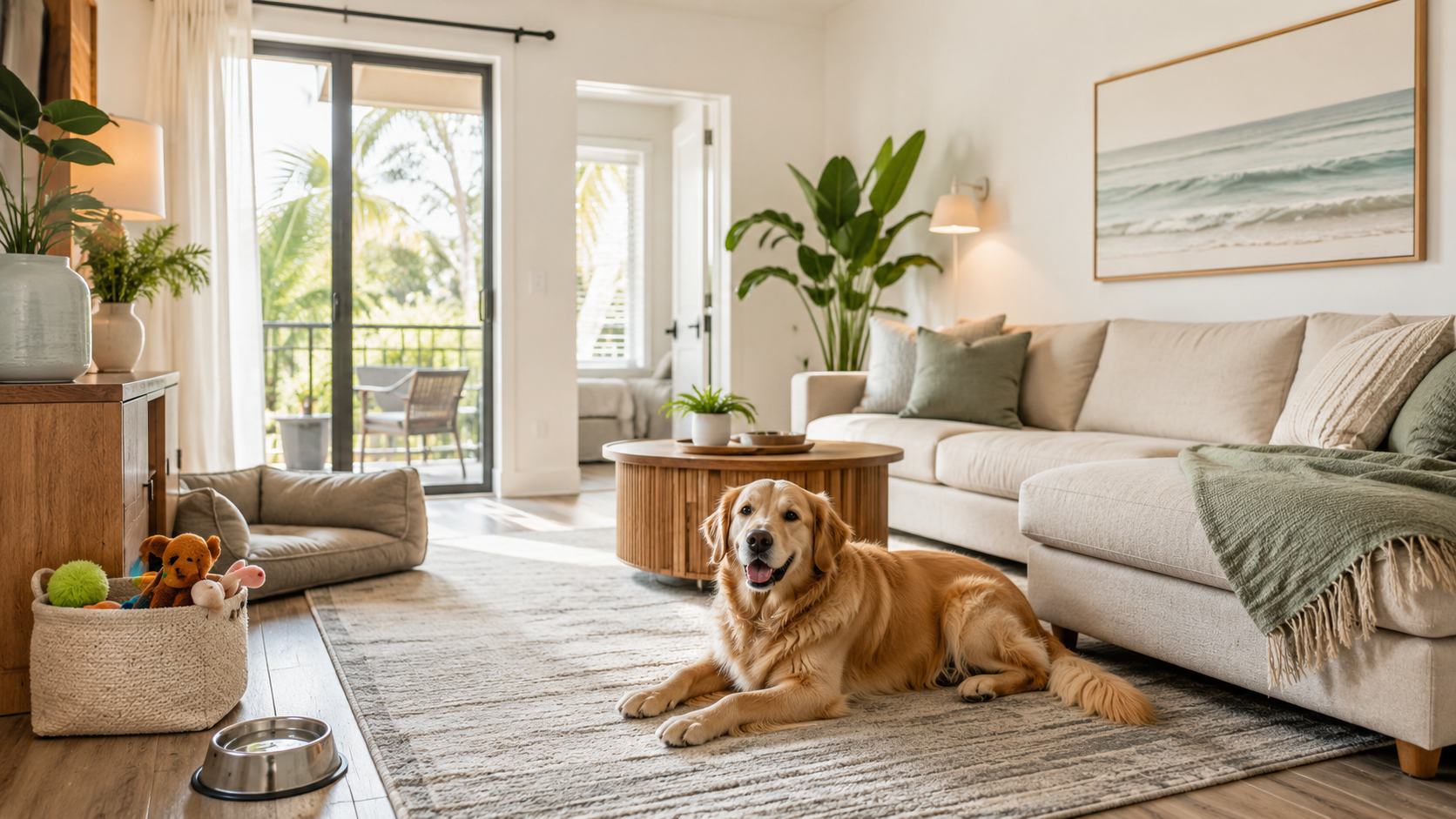
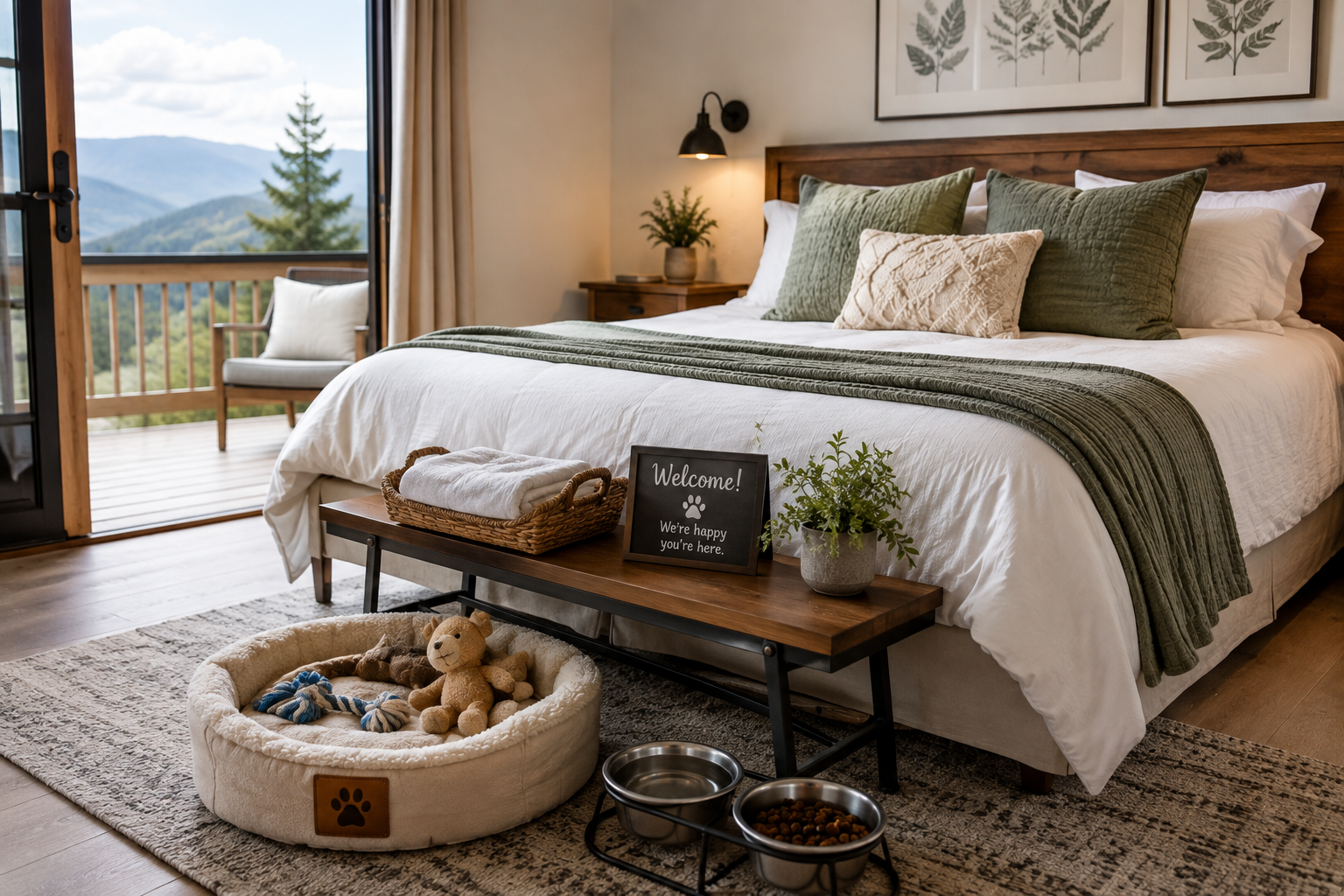
A spotless, pet-friendly vacation rental where every guest—two-legged or four-legged—can feel right at home.
A pet-friendly listing can earn you more bookings, longer stays, and a healthy pet fee. It can also earn you a review that opens with "found dog hair on the pillows." The difference comes down to what happens during turnover.
This pet friendly vacation rental cleaning checklist walks you through the full reset—room by room—so fur, odors, and stains never make it to the next guest. It supplements your standard Airbnb turnover cleaning checklist rather than replacing it, and every recommendation below is grounded in guidance from Airbnb, the CDC, the EPA, the Carpet and Rug Institute, and the ASPCA.
Key takeaways
Pet turnovers require a layered process: inspect and photograph first, remove hair dry before wet cleaning, treat odor at the source, and finish with a floor-level inspection.
Airbnb's pet fee covers expected cleaning like vacuuming fur; unexpected damage such as urine-soaked carpet may qualify for Host damage protection—but only if you document it before cleaning.
Never steam-clean a urine stain first. Heat can permanently set both the stain and the odor.
"Pet-safe" isn't a product category—it's a practice. Follow labels exactly, keep animals off wet surfaces, and be especially careful with essential oils around cats.
If same-day turnovers, recurring odors, or remote hosting make this checklist hard to execute consistently, that's the signal to bring in an STR-specialized cleaning service.
Why pet-friendly rentals need a specialized turnover process
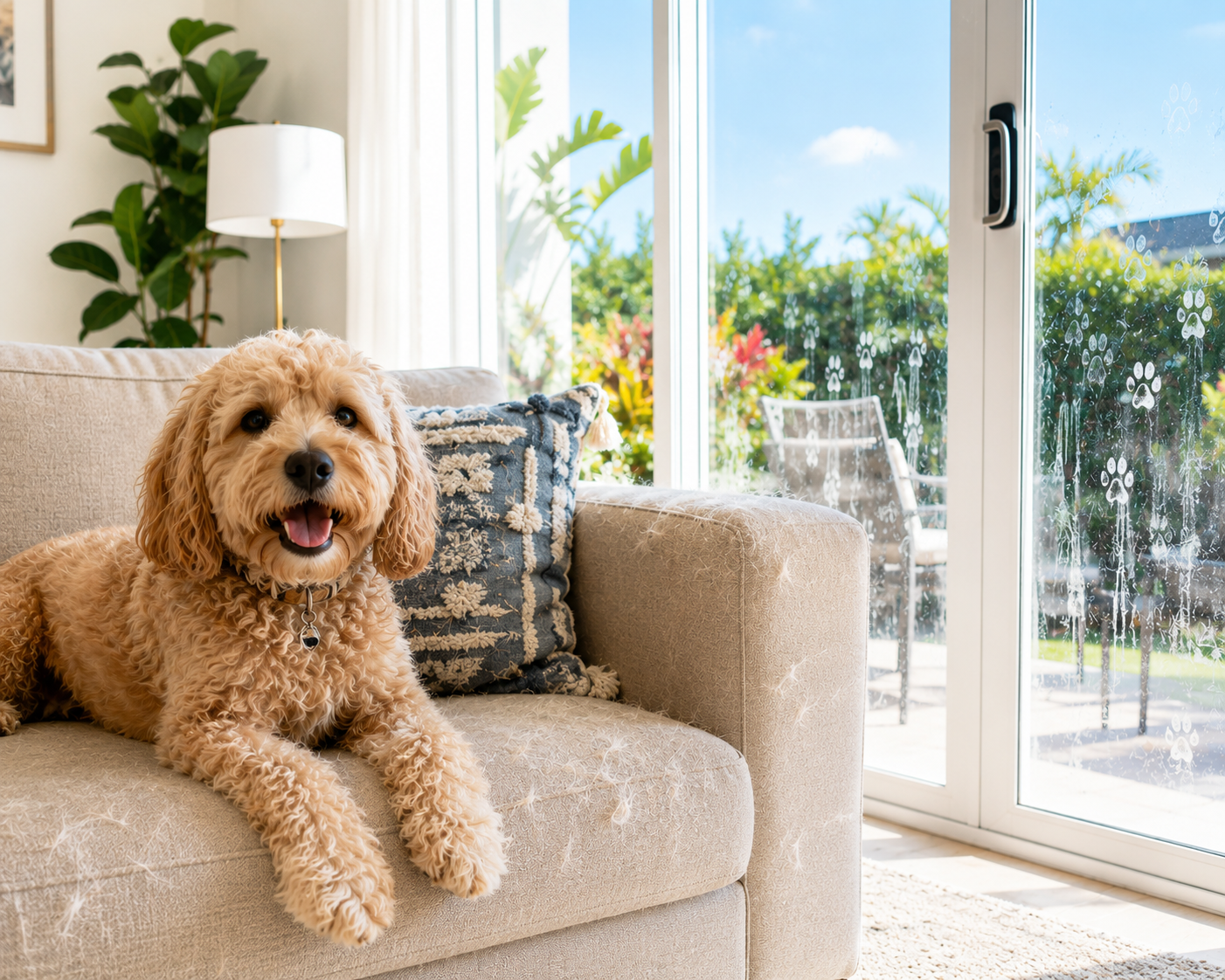
Pets may leave fur, prints, and smudges behind, but a detailed turnover makes sure the next guest never sees them.
Welcoming pets makes a listing more attractive to families and long-stay travelers, but it changes what has to happen between reservations. A standard turnover removes visible dirt while leaving fur embedded in upholstery seams, dander along baseboards, nose prints on glass, and urine residue beneath the surface of a rug. The property looks clean. It isn't.
Airbnb draws a useful line here. The platform lets hosts add a pet fee to cover the cleaning you'd expect after a pet stay—its own example is vacuuming fur off furniture and wiping nose or paw prints off sliding glass doors. You can structure that fee as a flat charge per booking, per pet, per night, or per pet per night, and it's folded into the nightly price rather than itemized at checkout. (One exception: service animals always stay free and can't be charged a pet fee.)
Unexpected costs are a different bucket. Airbnb's Host damage protection explicitly covers extra cleaning required to remove stains from pet accidents—but it excludes normal checkout tasks like laundry and trash, and claims live or die on evidence. That's why documentation is built into the checklist below, not bolted on afterward.
A proper pet turnover should accomplish seven things:
Remove visible and embedded pet hair.
Find and treat the source of odors instead of covering them with fragrance.
Catch urine, vomit, mud, claw marks, and chewing damage early.
Protect carpets, upholstery, linens, and flooring from permanent damage.
Reset pet amenities alongside regular guest supplies.
Document abnormal cleanup or damage before the evidence disappears.
Deliver a neutral, guest-ready environment—one where the next guest can't tell an animal was ever there.
The rest of this guide turns those seven outcomes into a repeatable process.
The complete pet friendly vacation rental cleaning checklist
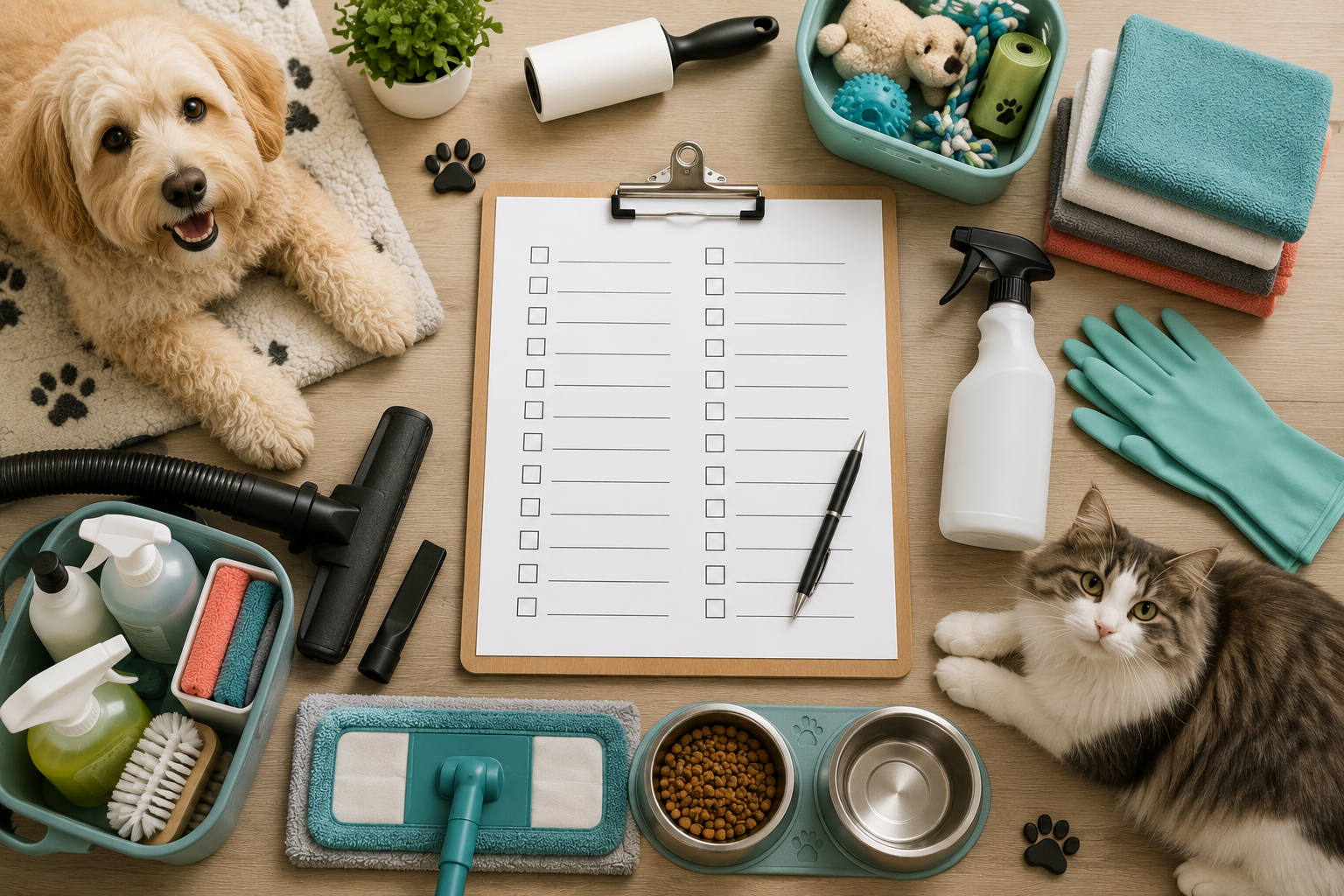
Welcome the pets, remove the evidence. From fur and odors to paw prints and pet bowls, this checklist covers the full vacation-rental reset.
Run this checklist after every reservation involving an animal. If you don't always know whether a guest brought a pet, fold it into your master turnover checklist permanently—unauthorized pets are common enough that the inspection step alone earns its keep.
1. Inspect and photograph before touching anything
The first walkthrough tells you whether you're handling a routine turnover or an abnormal cleanup—and it's your only chance to capture evidence in original condition.
Open curtains, turn on all lights, and ventilate if weather and security allow.
Photograph each room before cleaning begins.
Check beds, rugs, sofas, pet beds, crates, patios, and corners; look beneath beds and upholstered furniture.
Check baseboards, HVAC returns, stair edges, and curtain hems for fur.
Inspect windows and sliding doors for nose and paw prints.
Check furniture legs, door frames, and screens for chewing or scratching.
Photograph any stains or damage at both room level and close range.
Note extra labor, specialty treatment, or replacements that may be required.
Those photos matter twice: once for a potential damage-protection claim, and once as your before/after record if a guest later disputes a charge.
2. Remove waste and contaminated materials safely
Glove up before handling pet waste, urine-soaked materials, vomit, or heavily soiled bedding.
Pick up solid waste with disposable material, never a reusable cloth.
Seal waste before it goes in the exterior trash.
Bag heavily soiled linens separately from routine laundry.
Remove and replace disposable pet pads if they're part of your amenity setup.
Clean the affected surface with an appropriate detergent.
Never vacuum dry fecal material—it pulverizes into airborne particles.
Wash hands immediately after removing gloves.
One distinction keeps this step honest: cleaning and disinfecting are not the same job. Cleaning physically removes dirt and germs with detergent and friction; disinfecting uses chemicals to kill what remains. The CDC's pet-supply guidance is that soap-and-water cleaning handles most situations, with disinfection added for items that contacted urine, feces, or a sick animal—and that surfaces must be cleaned before disinfecting, because dirt blocks the disinfectant from reaching germs.
3. Strip, sort, inspect, and pretreat laundry
Pet hair and stains get dramatically harder to remove once linens go through a wash-and-dry cycle uninspected. The dryer, in particular, can bake a stain in permanently.
Strip every used bed—including apparently untouched ones if that's your standard.
Inspect sheets, duvet covers, mattress protectors, blankets, towels, and washable pet covers under bright light.
Shake linens as little as possible indoors.
Lint-roll or vacuum loose fur before washing; hair that goes into the machine ends up in the gasket and on the next load.
Pretreat visible stains per the care label and product instructions.
Keep stained items out of the dryer until the stain is fully gone.
Clean the washer gasket and dryer lint screen after hair-heavy loads.
Retire any linen that stays stained or odorous after treatment—and keep spare sets on hand so a bad stain never delays a same-day check-in.
Remake beds only with fully clean, dry, hair-free linens.
4. Remove pet hair from upholstery and furniture
Always do dry hair removal before any wet cleaning—wet fur mats into fabric. Airbnb's own professional-cleaning guide recommends a vacuum with attachments plus a reusable lint roller specifically for pet fur on fabric-covered furniture.
Remove sofa and chair cushions; vacuum the frame, cushion wells, seams, piping, and undersides.
Use the upholstery attachment—not the floor head dragged across fabric.
Run a crevice tool along furniture edges and between cushions.
Follow vacuuming with a lint roller on all fabric surfaces.
Don't skip throw pillows, fabric headboards, benches, dining-chair seats, or window seats.
Vacuum or launder pet beds per the care label.
Spot-test any upholstery cleaner in a concealed area first, and let damp fabric dry completely before staging.
Re-check each piece from a low angle—raking light reveals hair that's invisible from standing height.
A quick pass over the visible sofa surface isn't enough. Fur migrates into seams, behind cushions, under furniture, and onto nearby curtains, and a guest sitting down will find what a standing cleaner missed.
5. Clean floors from the edges toward open areas
Pet hair collects at walls and transitions long before it shows in the middle of a room, so work from the perimeter inward.
Vacuum baseboards, floor edges, corners, stair risers, and thresholds first.
Vacuum beneath beds, sofas, side tables, and pet bowls.
Use a hard-floor attachment rather than a broom, which just scatters hair.
Vacuum rugs slowly, in overlapping passes, from more than one direction.
Lift movable rugs and clean the floor beneath them.
Mop hard floors only after loose fur and soil are gone, with a cleaner approved for that flooring.
Check the mop head mid-job so it doesn't redeposit hair.
Clean patios, balconies, outdoor rugs, and pet-relief areas where applicable.
Do a final floor-level inspection after everything dries.
6. Reset bedrooms
Inspect the mattress protector for stains, odor, or fur; replace if in doubt.
Vacuum fabric headboards and upholstered bed frames.
Clean under beds and behind nightstands.
Wipe baseboards, bedside tables, lamps, and switches.
Check curtains and lower window coverings for hair.
Make the bed with fresh, hair-free linens.
Confirm no fragrance is being used to hide a residual pet smell.
Photograph the finished bed and floor area.
7. Reset bathrooms
Check bath mats and towels for fur or stains.
Clear hair from drains and surrounding floor edges.
Scrub the tub or shower; clean the toilet, sink, counter, and mirror.
Wipe lower cabinet faces where pets rub against surfaces.
Clean behind the toilet and around the vanity—prime fur-collection zones.
Replace all guest towels and restock toiletries.
Remove all cleaning residue before closing the room.
8. Reset the kitchen and dining area
Remove abandoned pet food and treats; store provided treats in sealed containers.
Wash pet bowls separately from guest dishes, or run dishwasher-safe bowls through the dishwasher—the CDC confirms that's an acceptable way to clean and disinfect them.
Check beneath the dining table, island, and refrigerator edge for kibble.
Wipe cabinet fronts, chair legs, and lower walls.
Clean nose prints from glass doors and reflective appliances.
Sanitize food-prep surfaces with products rated for those surfaces.
Empty, clean, and reline trash cans.
9. Reset pet amenities
The items you provide for animals need the same standard as everything else.
Wash and dry food and water bowls.
Clean crates and removable crate trays.
Launder washable pet-bed covers; the CDC's method for soft pet items is simply the washing machine and dryer.
Clean or replace heavily soiled pet toys—and discard anything that can't be adequately cleaned.
Inspect leashes, gates, and waste-bag dispensers; refill waste bags.
Clean food mats and the floor underneath them.
Check outdoor gates and fences for damage.
Confirm pet rules and emergency info are still visible.
10. Finish with a pet-specific quality-control check
Before locking up:
Walk every room slowly at floor level.
Inspect dark furniture against the light for pale fur, and light furniture for dark fur.
Sit on the sofa and view the room the way a guest will.
Smell near rugs, upholstery, beds, corners, and pet-item locations.
Check doors and windows for remaining paw or nose prints.
Confirm treated areas are fully dry and no chemicals are left accessible.
Verify bowls and pet amenities are clean and staged, and guest supplies restocked.
Take final photos of each room and any treated area.
Log unresolved odor, discoloration, or maintenance needs for follow-up.
That's the full reset. The next three sections go deeper on the three problems that generate the most pet-related guest complaints: hair, odor, and stains.
How to remove pet hair from an Airbnb
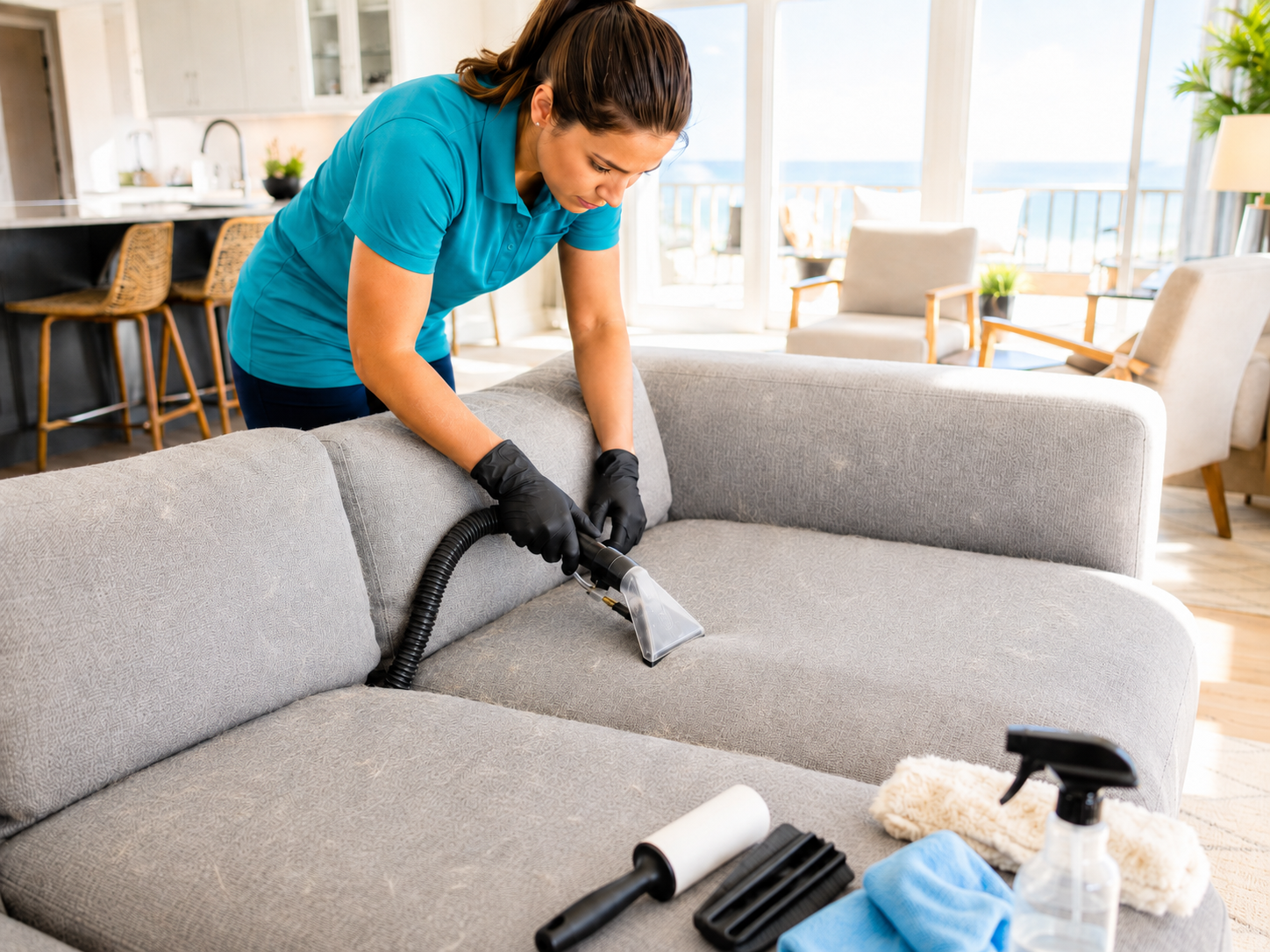
The fur you can see is only the beginning. Deep cleaning the cushions, seams, and upholstery helps restore a cleaner, fresher stay.
No single tool gets all the hair. What works is a layered sequence: dry removal first, wet cleaning second, inspection last.
Vacuum fabric furniture with upholstery and crevice attachments, then follow with a reusable lint roller. Vacuum floors from the edges inward and clean under furniture before mopping. In the laundry, dryer balls help keep hair and lint from re-clinging to linens—another tip straight from Airbnb's professional-cleaning guidance—though you'll still need to clear the lint screen and washer gasket after a heavy load.
Then cover the places a normal residential clean misses: cushion wells, upholstery seams, fabric headboards, mattress protectors, curtain hems, rug edges, stair corners, baseboards, HVAC returns, under-bed areas, and outdoor furniture cushions.
Finish with your eyes, not your assumptions. After vacuuming and rolling, inspect under bright, directional light and from seated or floor height. Hair that's invisible when you're standing is obvious to a guest sitting on the sofa or setting a suitcase on the floor.
Airbnb pet odor removal that actually works
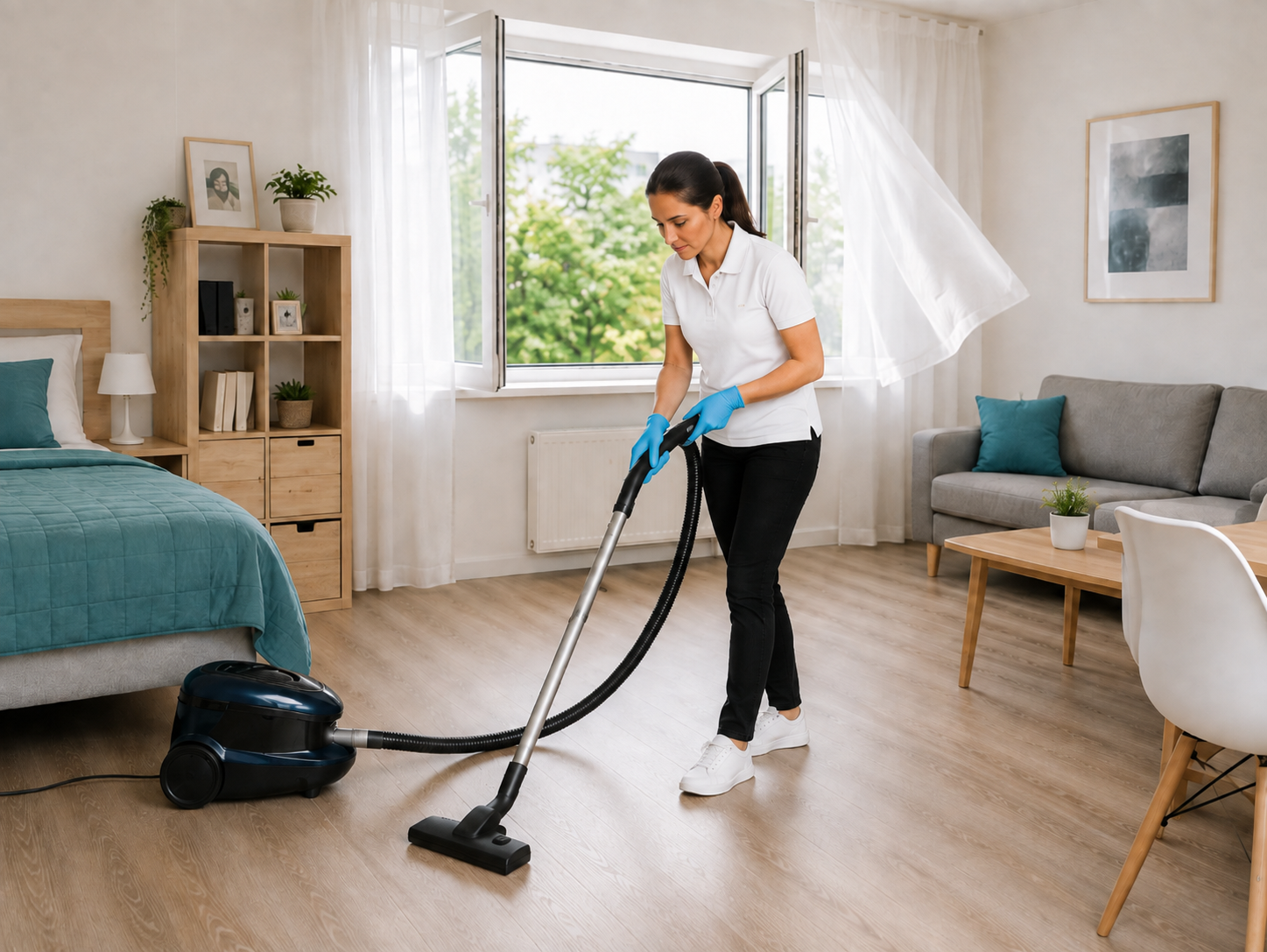
Furry guests are welcome. Lingering smells are not. 🐾
Effective Airbnb pet odor removal starts by finding the source. Spraying fragrance into a room changes what it smells like for an hour; it does nothing about urine under a rug or contamination inside upholstery foam. Airbnb's professional-cleaning guide is blunt about this: masking odors with bleach or air fresheners usually doesn't work, and strong scents of any kind put guests off. Its cleaner-recommended alternative for stubborn smells is ventilation plus running an air purifier for two to three hours.
Work this sequence:
Ventilate the room.
Inspect likely sources: rugs, carpet edges, upholstery, pet beds, trash cans, baseboards, flooring around bowls.
Remove solids and absorb fresh liquid.
Clean the affected material with a product approved for that surface.
Rinse or extract as the product directs, then dry completely.
Re-inspect only after the surface is dry—damp carpet lies about odor.
Escalate persistent odor. If it survives proper cleaning, the contamination has likely reached carpet padding, subflooring, or furniture foam, and that's remediation territory, not turnover territory.
The Carpet and Rug Institute's technical bulletin on pet urine explains why speed matters: urine chemistry varies with the animal's diet, age, and health, it can react with carpet dyes, and some stains and odors become permanent no matter what you do afterward.
One caution on "natural" solutions: the ASPCA warns that essential oils—especially around cats—can cause gastrointestinal, nervous-system, and even liver problems, and inhaling them can lead to aspiration pneumonia. Skip oil-based deodorizing in a pet-friendly unit entirely.
Vacation rental pet stain removal, step by step
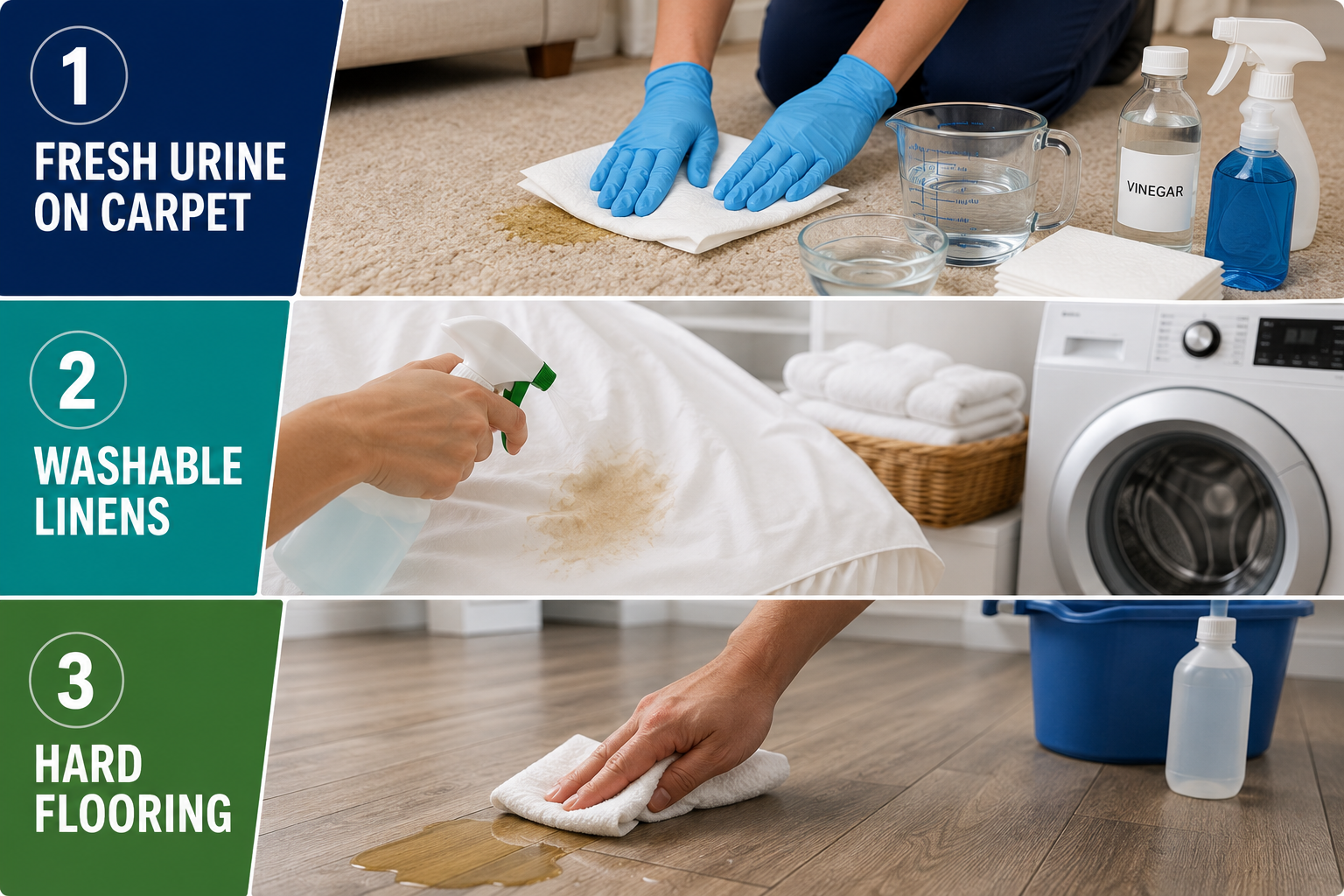
Pet stains? Blot, treat, dry, and inspect—fast action protects carpets, linens, and floors.
Fresh urine on carpet
Blot immediately with dry white paper towels—press, don't scrub.
Apply the Carpet and Rug Institute's recommended solution: 1/4 teaspoon of clear liquid dishwashing detergent (non-bleach, non-lanolin) in one cup of lukewarm water. Blot it in with saturated paper towels; don't use laundry or automatic-dishwasher detergent.
Alternate blotting and rinsing with clean water as long as the stain keeps transferring to the toweling.
Follow with a solution of one cup white vinegar to two cups water, blot, then cover with a half-inch layer of paper towels weighted down with something flat and heavy. Change the towels until the carpet is fully dry.
Pretest any commercial spot remover in a concealed area first.
Keep the area out of service until completely dry, then re-inspect for both discoloration and odor.
And the mistake that ruins carpets: do not steam-clean a urine spot as your first response. The Humane Society's stain-removal guidance warns that heat permanently sets both the stain and the odor by bonding the proteins into the fibers. Cool-water rinsing and extraction come first; heat-based cleaning only after the contamination is gone.
For dried stains, large areas, or urine that's penetrated the backing, a standard turnover is no longer the right tool—the pad or subfloor may need professional assessment. Photograph the area before treatment, record the work performed, and keep any invoices. That's exactly the evidence an Airbnb damage-protection claim requires.
2. Washable linens
Pretreat before washing, follow the care label, and inspect after washing but before drying—the dryer sets whatever the wash didn't remove. Repeat treatment if needed, and never return a permanently stained or odorous linen to guest rotation.
3. Hard flooring
Absorb fresh liquid immediately and use a product approved for the specific material. Don't flood seams in laminate, wood, or engineered flooring—liquid that travels under the surface causes more damage than the stain did. Dry thoroughly and check grout lines and transitions where liquid wicks sideways.
Choosing pet-safe cleaning products for your Airbnb
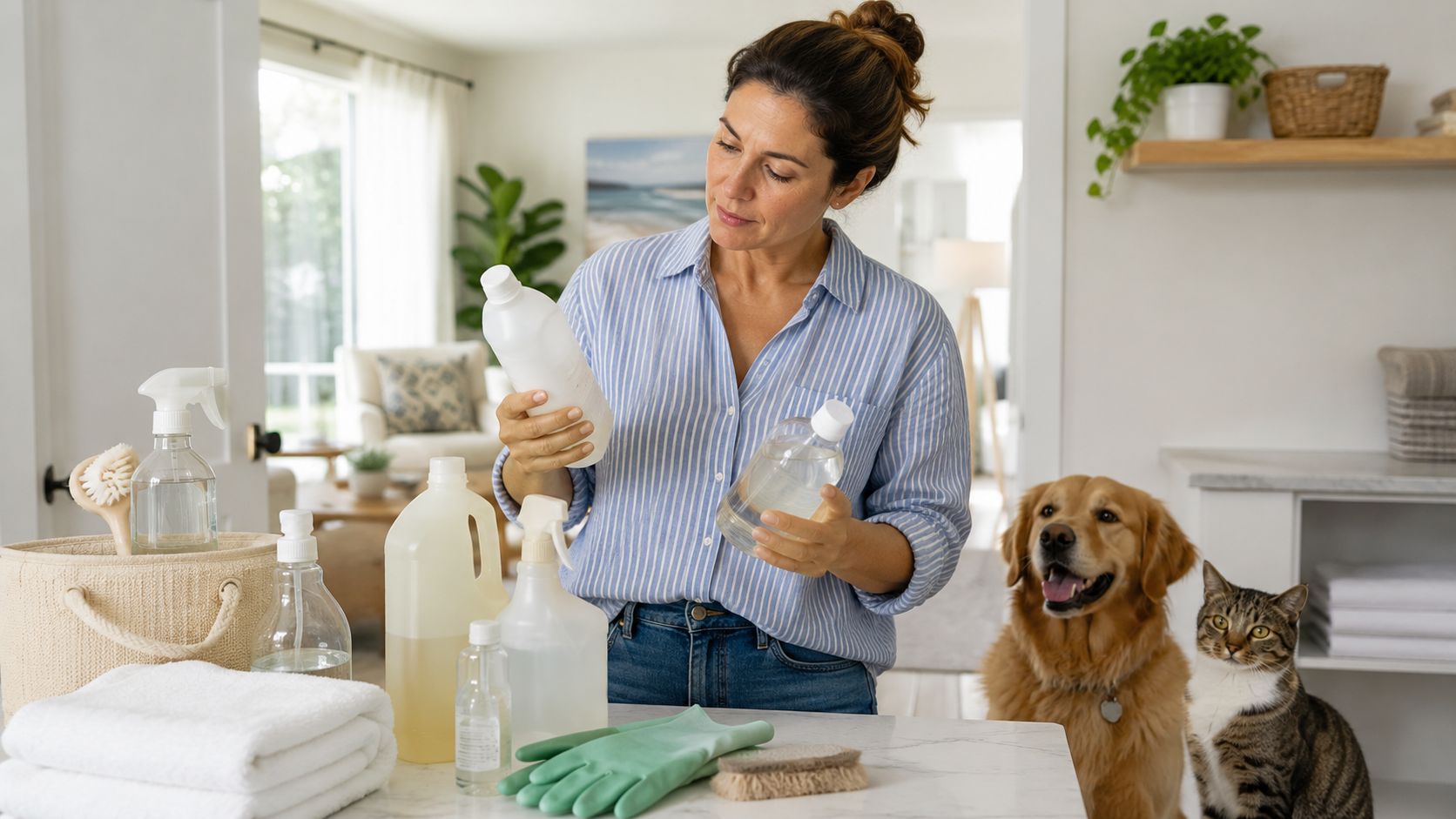
Keep your rental sparkling without compromising the comfort of furry visitors.
"Pet-safe" on a label is a marketing phrase, not a guarantee. A product's actual safety depends on its ingredients, dilution, the surface it's used on, ventilation, and whether an animal can reach the area before it's dry. The ASPCA's position is reassuring but conditional: most cleaning products can be used safely around dogs and cats—as long as label directions are followed and pets are kept away until treated surfaces dry.
A workable product policy for a pet-friendly rental:
Prefer products carrying the EPA Safer Choice label where a suitable one exists. Nearly 2,000 products qualify, every ingredient is reviewed against health and environmental criteria, and certified products are re-audited annually—a far stronger signal than a "pet-friendly" marketing claim.
Read the complete label before use and follow dilution and contact-time instructions exactly.
Keep products in their original labeled containers—never in beverage bottles or unlabeled sprayers—and store them in a locked owner's closet.
Keep animals away from wet treatments and open containers, and rinse food-contact surfaces when the label requires it.
Never mix bleach with ammonia, acids, or other cleaners; the fumes can be dangerous. Don't combine any cleaning or disinfecting products unless the label explicitly says to.
Post the ASPCA Animal Poison Control number—(888) 426-4435—in your supply closet. If a guest's pet gets into a product, you want that number findable in seconds.
Stock a dedicated pet-turnover station so your cleaner never discovers an empty stain-remover bottle mid-turnover: disposable gloves, white absorbent towels, sealed waste bags, a vacuum with upholstery and crevice attachments, a reusable lint roller, a surface-compatible pet stain and odor product, laundry pretreatment, spare mattress protectors, spare sheets and towels, and replacement pet-bed covers if you supply them.
When to hire a pet friendly vacation rental cleaning service
When pet fur, stains, and dirt become too much to handle, it may be time to call a professional cleaning service.
Plenty of hosts handle the occasional pet turnover themselves. The math changes when any of these become routine:
Frequent same-day turnovers, where a single urine stain can blow the check-in window.
Recurring hair complaints despite regular vacuuming, or odors that return after surfaces dry.
Extensive carpet and upholstery, multiple properties needing one standard, or remote hosting where you can't verify the work yourself.
Abnormal cleanups that need documentation you can actually submit with a claim.
A true pet-friendly vacation rental cleaning service understands the difference between a residential clean and an STR turnover: fixed checkout and check-in windows, property-specific checklists, linen rotation, restocking, damage documentation, staging, and a verified final inspection. When you're comparing providers, skip the hourly rate for a minute and ask how they remove hair from hidden areas, how they document stains, what's included in a normal turnover versus priced as abnormal contamination, how they handle same-day check-ins, whether they have backup staffing, and who performs the final inspection. A provider without confident answers isn't ready for pet-friendly properties.
That standard is exactly how we built HappyCleanBnB. Our Austin team works exclusively on Airbnb, Vrbo, and short-term rental turnovers—no general housecleaning—with property-specific checklists, fresh linens, restocking, before-and-after photos, incident reporting, calendar-synced scheduling, and a manager-level quality check before every arrival. Because pet issues rarely stay just cleaning problems, we also offer add-ons like supplies management, pre-arrival inspections, minor-repair support, and outdoor touch-ups. We serve Austin and surrounding communities including Cedar Park, Round Rock, Georgetown, Leander, Dripping Springs, Buda, Kyle, and Bastrop, with no long-term contract required.
Frequently asked questions
What should a pet-friendly Airbnb cleaning checklist include? A pre-clean inspection with photos, waste removal, linen inspection and pretreatment, upholstery and floor vacuuming, lint rolling, paw-print removal, pet-item cleaning, odor-source treatment, stain treatment, restocking, and a final floor-level hair-and-odor inspection. It layers onto—not replaces—your normal kitchen, bathroom, bedroom, and staging tasks.
How is it different from a normal turnover checklist? A standard turnover emphasizes linens, bathrooms, kitchen, floors, and presentation. The pet version adds detailed inspection of fabric surfaces, floor edges, rugs, lower walls, pet amenities, damage points, and odor sources—plus an escalation path for contamination that can't be resolved inside a same-day clean.
What's the best way to remove dog hair from Airbnb furniture? Remove the cushions, vacuum the frame and cushion wells with upholstery and crevice attachments, vacuum all sides of each cushion, and finish with a reusable lint roller. Then check seams, piping, the headboard, throw pillows, and the floor underneath. The vacuum-then-roller combination comes straight from Airbnb's own professional-cleaning recommendations.
How do I get pet urine odor out of an Airbnb? Find and treat the contaminated material instead of masking the room. Blot fresh liquid, clean with the CRI detergent-and-water method or a surface-appropriate product, rinse, extract, and dry completely. Never start with steam—heat can set the stain and odor permanently. If odor persists after proper treatment, the contamination has likely reached the padding or subfloor and needs professional remediation.
Should I disinfect the whole rental after a pet stays? Usually not. The CDC's guidance is that ordinary cleaning with soap or detergent handles most situations, with disinfection added for items or surfaces that contacted waste or a sick animal. When you do disinfect, clean the surface first and follow the label's contact time.
Can I charge an Airbnb pet fee for the extra cleaning? Yes. Airbnb lets you set a pet fee—flat per booking, per pet, per night, or per pet per night—to cover expected pet cleaning like vacuuming fur and wiping paw prints. Service animals are the exception and always stay free. Extensive unexpected cleaning or damage runs through Host damage protection instead, which is why pre-clean photos and records matter.
How often should a pet-friendly Airbnb be deep-cleaned? Airbnb's professional-cleaning guidance suggests a deep clean every two to three months to catch what compressed turnovers can't—and pet-friendly properties sit at the aggressive end of that range. Prioritize carpet extraction, upholstery, under-furniture areas, mattress protectors, vents, baseboards, window treatments, and outdoor cushions. Treat it as preventive maintenance, not a response to a bad review.
Keep the pets. Lose the fur, stains, and stress.
Pet-friendly hosting should expand your booking potential, not your turnover workload. Put this pet friendly vacation rental cleaning checklist in writing, hand it to whoever cleans your property, and hold every turnover to the same floor-level standard—your reviews will show the difference within a few stays.
And if you'd rather hand the whole process to a team that does this every day, we're here. Schedule a free call with HappyCleanBnB and we'll customize this checklist for your property, surfaces, pet policy, and booking calendar.
